uPVC vs Wooden Windows: Cost, Upkeep and Period Homes
For most ordinary houses uPVC is the sensible choice: it usually costs much less and needs very little upkeep. Wooden windows win on period homes, where slim frames and traditional joinery are part of the look and a tired window can often be repaired instead of replaced.
Replacement windows in England are expected to meet the same energy standard in either material, so warmth rarely separates them. What does is the price, how much looking after you are happy to do, and how closely the new window has to match the house. The rules mentioned here are for England.
How do uPVC and wooden windows compare?
| Feature | uPVC | Wooden |
|---|---|---|
| Upfront cost | Typically lower | Typically higher |
| Upkeep | Wipe clean; check seals and hardware | Repaint or re-stain before the finish fails |
| Repairs | Replace the part or sealed unit | Often mended in place |
| Look up close | Typically deeper frames, welded corners | Usually slimmer frames, jointed corners |
| Energy standard | Can meet it | Can meet it |
| Period homes | Depends on the house and the council | The traditional match |
How much more do wooden windows cost than uPVC?
Typically a lot more. In its guide to replacing windows, updated 8 October 2026, the HomeOwners Alliance gives UK averages credited to Checkatrade of £325 for a uPVC window, £925 for a timber casement and £1,490 for a timber sash. Treat these as indicative only, since the Checkatrade figures are undated and do not say whether VAT is included.
A quote for your own openings is the only number that counts. What moves it, in either material:
- Size and style: bigger panes, sashes and bays usually cost more than plain casements
- Finish: white, foiled, painted or stained, applied at the factory or on site
- Glass: double or triple glazing, the spacer type and any safety glass
- Installation: scaffolding, taking out the old windows, and plaster and sill repairs afterwards
Timber also carries a running cost: redecorating before the finish fails. uPVC has very little, though hardware and sealed units do wear. Which works out cheaper over the years depends on how long you stay and how much you do yourself.
How much upkeep do wooden and uPVC windows need?
Wooden windows need noticeably more upkeep than uPVC, and that is the main trade-off. The finish is what protects the wood: paint or stain keeps water out of the joints, and once it cracks or peels, moisture gets in and rot can follow. Look the frames over once a year and redecorate before that happens. Check these first:
- Corner joints: cracks or gaps in the paint where water can get in.
- Bottom rail and sill: bare or flaking patches, because water collects there first.
- Sashes that stick after rain: this can be a sign the wood is taking up moisture.
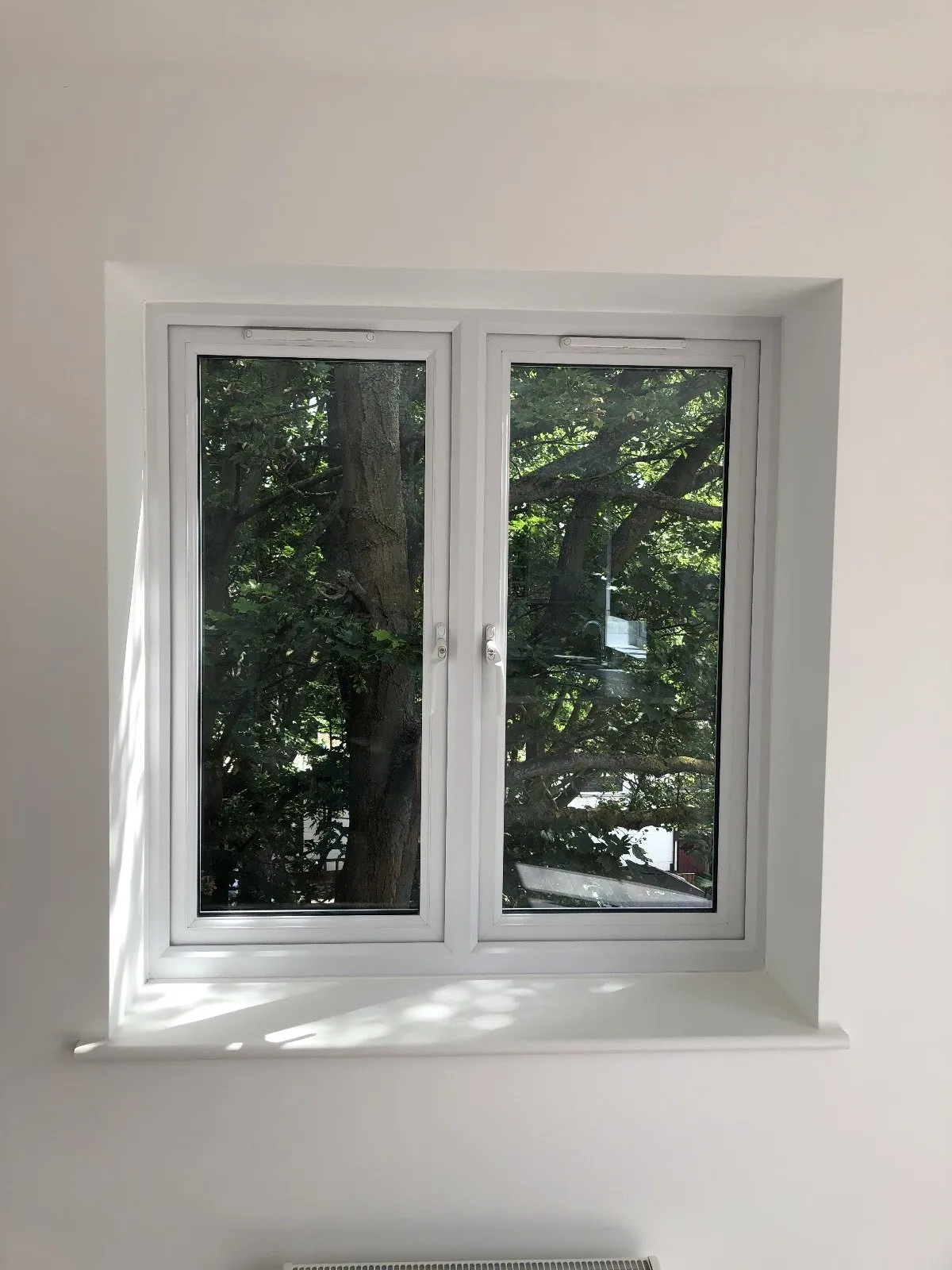
uPVC asks for much less: a wash with mild soapy water, clear drainage slots at the bottom of the frame, and hinges and handles that still move smoothly. If a sealed unit mists up between the panes, the seal has failed and the usual fix is a new unit in the same frame. Older white frames can yellow with age.
Which is better for a period home?
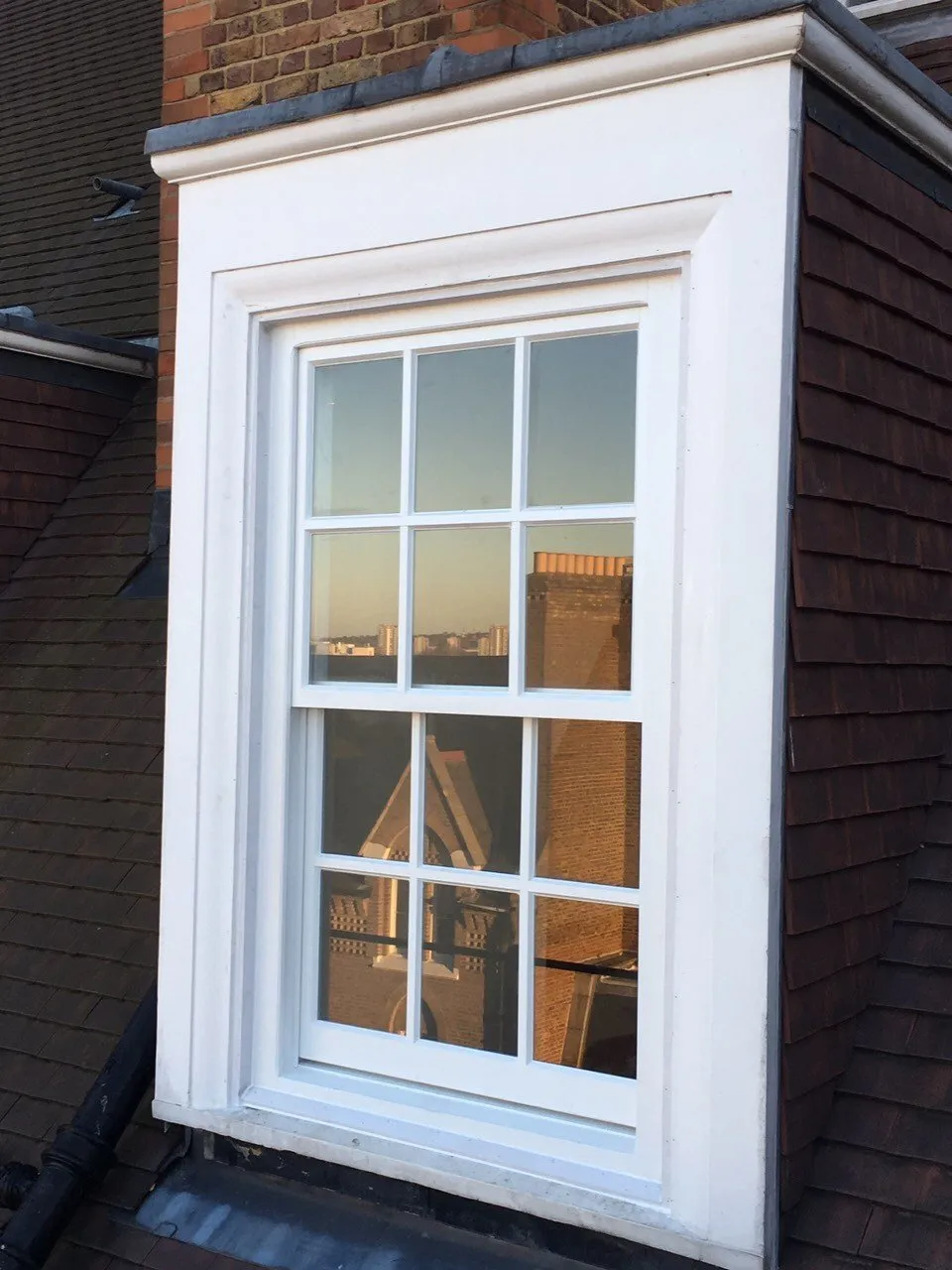
Usually wooden windows. Georgian, Victorian and Edwardian houses were built with timber windows, often with slim frames and glazing bars, and sashes that slide up and down rather than swing. New timber windows can copy those details closely. uPVC can look right from across the road, but up close the frames are typically deeper and the corners are welded rather than jointed.
Our sash windows are made in timber, uPVC and aluminium. Timber is the most popular choice, and we give a guarantee of up to 30 years on selected timber sash windows.
That does not make uPVC wrong for every older house. On an unlisted house, a good uPVC window in a matching style on a rear elevation nobody sees from the street can be a sensible saving.
What if the house is listed or in a conservation area?
Ask your council before you order: the Planning Portal says listed buildings need listed building consent for significant work, and conservation areas and national parks may have extra restrictions. Our guide to types of windows sets out the wider rules for replacing windows in England.
Do your old wooden windows need replacing?
Often not, according to Historic England. Rot tends to start at the bottom rail, the sill and the lower joints, and a joiner can cut out the damaged section, splice in new timber and repaint. Draught-proofing strips and a secondary pane fitted inside can cut draughts and heat loss without changing the look of the front of the house.
Before you accept a quote that says everything must go, prod the bottom rail and the sill with a screwdriver. Sound wood resists; rotten wood feels soft and crumbles. If the damage is limited, ask for a repair price next to the replacement price.
Which is warmer, uPVC or wooden windows?
Neither, by default. Both can reach the energy standard for replacement windows in England, and timber has not had an easier version of it since June 2023 (Approved Document L). The glass, the seals and the quality of the fit matter as much as the frame, so compare the certified figure for the exact window rather than the material.
Listed and conservation-area homes get some flexibility. The standard can be relaxed, but only where meeting it would unacceptably change the building's character. In that case the guidance allows alternatives, such as keeping single glazing and adding a low-emissivity (heat-reflecting) secondary pane inside. Your council's Building Control team can tell you what applies.
Which should you choose, uPVC or wooden windows?
uPVC windows suit a like-for-like swap in an ordinary house when:
- Cost and low upkeep come first.
- The windows are at the back or sides, or too high to repaint easily.
- You want a traditional look in white or woodgrain without the redecorating.
Wooden windows are worth the extra cost when:
- The house is listed or in a conservation area, or is a period home where the front matters.
- You need sashes and slim glazing bars to match the originals.
- You want windows that can be repaired section by section, and you are happy to keep the finish up.
What should you ask a supplier before you order?
- Settle whether you need new windows at all: whole replacement, glass only, or repair plus draught-proofing.
- If the house is listed, or in a conservation area or national park, get the council's answer before you order.
- Ask for a sample of the actual frame and hold it against your existing window.
- For wooden windows, ask which timber is used, how the corners are jointed, and whether the finish is applied at the factory or on site.
- Ask for the certified U-value (how much heat the window lets through) or Window Energy Rating of the exact window, with its glazing specification; trickle vents, escape-size openings and safety glass should be on the quote where they apply.
- Compare quotes like for like, down to who takes out the old windows and makes good the plaster and window boards.
- Find out which scheme the installer is registered with for window replacements (FENSA and CERTASS are two on the government list) and verify it with the scheme.
- Get guarantee terms in writing, and ask what is covered for the frame, the finish and the glazing.
Frequently Asked Questions
Can uPVC windows look like wooden ones?
Up to a point. Woodgrain foils, flush sashes and slim glazing bars can get close from across the road. Up close, the depth of the frame, the corners and the sheen usually give it away, so hold a sample against your existing window in daylight. In a listed home or conservation area, check what the council will accept first.
Can you mix uPVC and wooden windows in one house?
Yes. A common compromise on period houses is timber at the front, where the look matters most, and uPVC at the back, where few people see it. Hold a sample of each against the same wall first, because shade and sheen will not match exactly. If aluminium is also on your list, see our comparison of uPVC vs aluminium windows.
Can I replace only the glass in my old wooden windows?
Yes, if the frames are sound and a joiner confirms they can take double-glazed units. You keep the frames and the look of the house, and a glass-only change falls outside the energy standard for whole new windows. If the house is listed, ask the council first.
Which is better for the environment, uPVC or timber?
There is no simple winner. Wood is renewable when it is responsibly sourced, but any window that fails early wastes whatever went into it. Ask the supplier where the timber comes from, and whether the uPVC frames and sealed units can be recycled.
Sources
- Approved Document L: Conservation of fuel and power, Volume 1: Dwellings, Ministry of Housing, Communities and Local Government, 2021 edition incorporating 2023 amendments
- Competent person scheme: current schemes and how schemes are authorised, Ministry of Housing, Communities and Local Government, updated 17 September 2026
- Doors and windows: planning permission, Planning Portal, accessed 8 November 2026
- Modifying Historic Windows as Part of Retrofitting Energy Saving Measures, Historic England, updated 23 July 2024
- Replacing windows: what to expect, HomeOwners Alliance, updated 8 October 2026
Final Thoughts
A wooden sash and a uPVC one can look alike in a photo and feel very different in the hand. Compare them at our showroom in Fulham, where our specialists can talk you through the differences.
Ready for a number? Ask for a free estimate and compare it with any other quote using the questions above.
uPVC suits most houses on cost and upkeep, timber suits period homes on looks and repairability. Get the certified figures and guarantee terms in writing either way, and ask for timber and uPVC sash windows side by side in the same estimate.