Sash Window Parts: Names and What Each One Does
Sash window parts fall into three groups: the box frame fixed in the wall, the two sashes that slide in it, and the cords, pulleys and weights that balance them. Knowing their names helps you read a survey or a quote, and see which part has failed when a sash sticks or drops.
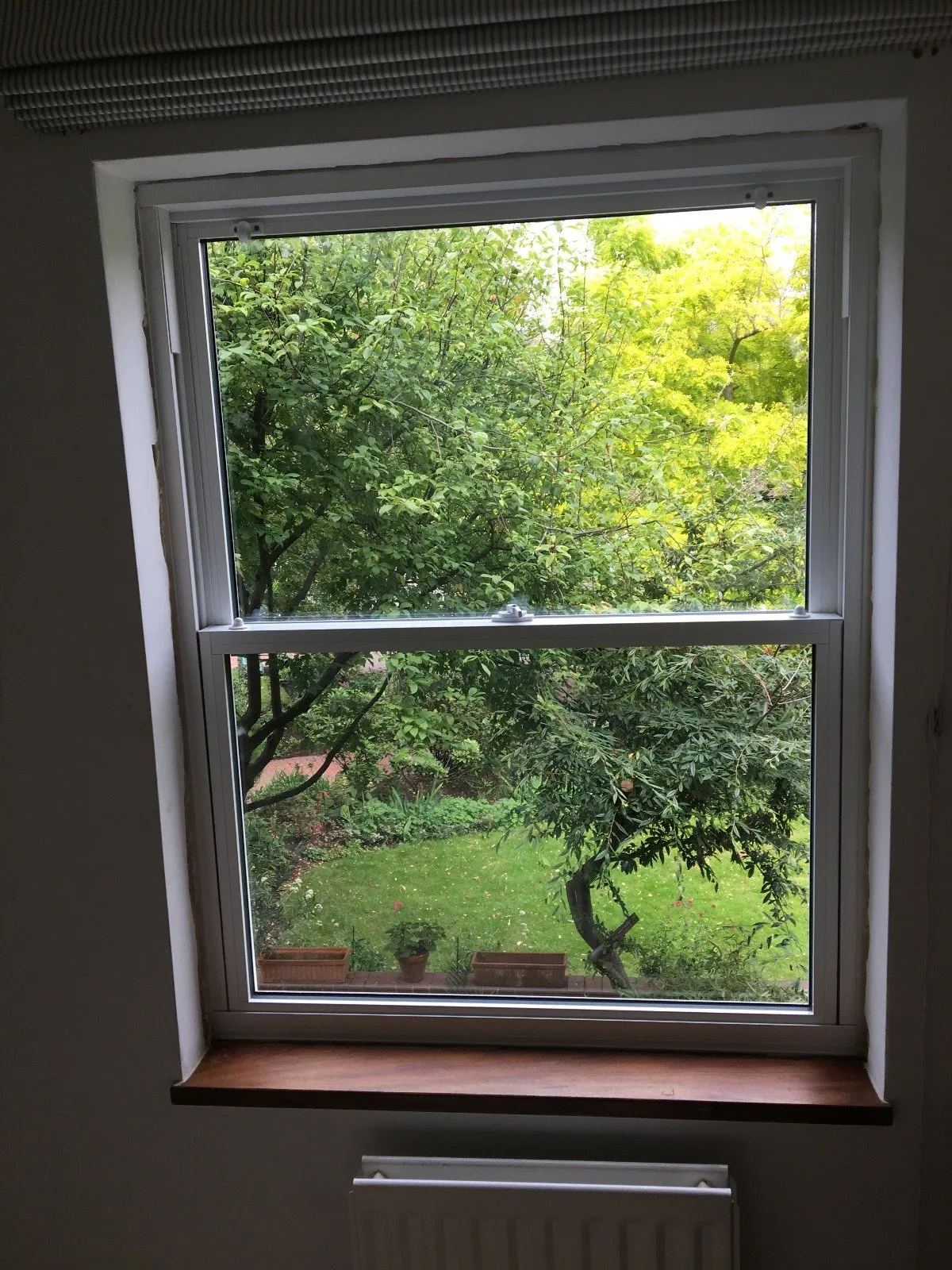
We make sash windows in timber, uPVC and aluminium. Most of ours run on weights and pulleys, with spring balances mainly where the wall has no room for the weight boxes. We service the sash windows we have fitted, and for older windows we find replacement is often better value than repair.
What are the parts of a sash window?
The names below are the ones Historic England uses in its guide to traditional windows.
| Part | Where it is | What it does |
|---|---|---|
| Box frame | Fixed in the wall opening | Holds the sashes and hides the weights in its hollow sides |
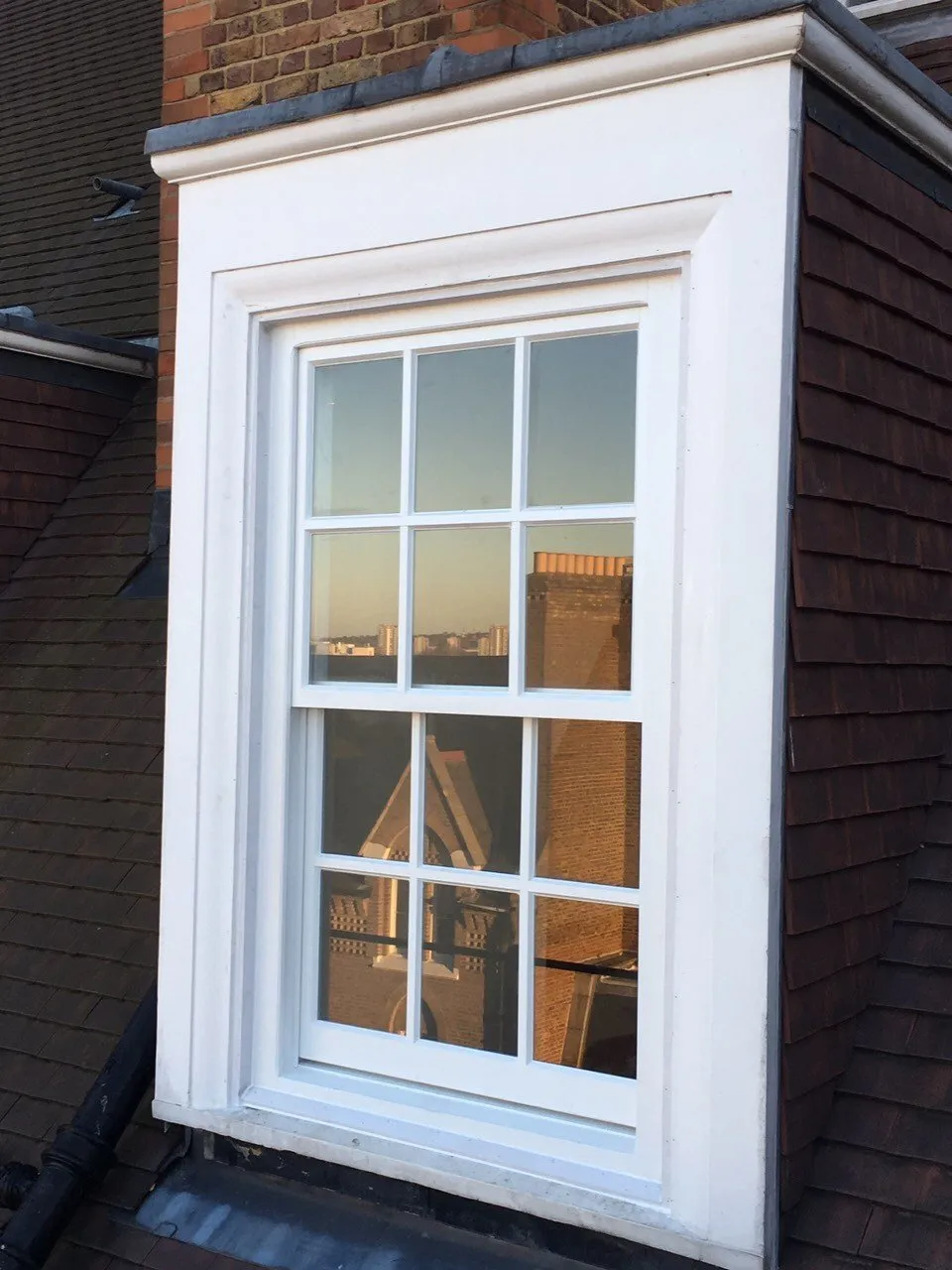
| Top and bottom sash | Inside the box frame | The glazed frames that slide up and down |
| Stiles and rails | The sides, top and bottom of each sash | Hold the glass |
| Meeting rails | Where the two sashes meet | Carry the fastener that locks the sashes together |
| Horns | Below the meeting rail of the top sash | Strengthen the joints at each end of the meeting rail |
| Glazing bars | Across the sash | Divide the glass into panes |
| Parting bead | Down each side, between the sashes | Separates the sashes and holds them in position |
| Staff bead | Down each side, on the room side | Comes off to free the bottom sash |
| Pulleys and cords | Pulleys near the top of each side; a cord runs from the sash over each pulley | Connect each sash to its weights |
| Weights | Hidden in the sides of the box frame | Balance the sash so it stays where you leave it |
| A removable piece in each side of the box frame | Gives access to the weights | |
| Cill | At the bottom of the frame | Closes the bottom of the window; especially prone to decay |
| Fastener and sash lifts | On the sashes | Lock the sashes together and give you something to pull |
Historic Environment Scotland's Engine Shed guidance describes the same layout: the sashes slide in channels in the case, formed by the case and two strips of timber, with the cords running over pulleys in the top of the case to lead or iron weights hidden inside it. It also notes that windowsills are especially prone to decay. In Scotland the window is called a sash and case window.
How do the cords, pulleys and weights work together?
In a double hung sash window, Historic England says, each sash has its own pulley and cord, and the parting bead keeps the two sashes apart. The sash and its weights are almost equal, so the sash stays where you leave it; our guide to replacing sash windows covers what usually goes wrong with this system.
Cords can be cotton, jute or nylon, and some sashes from the later 19th century hang on metal chains instead. Georgian and Victorian windows had brass or hardwood pulleys and lead weights, later cast iron. If the glass changes, the balance changes too: Historic England's Advice Note 18 notes that sash windows may need heavier weights to balance heavier double glazing.
How is a broken sash cord replaced?
Historic England shows the usual steps:
- Take off the staff bead to free the bottom sash.
- Open the pocket to reach the weights.
- Tie a small lead weight, known as a mouse, to a string on the new cord and run it over the pulley into the weight box.
- Knot the weight to the new cord, adjusting the weight if the sash needs a better balance.
- Fix the cord into the groove in the side of the sash.
Chains are replaced in much the same way, screwed into a special fitting on the sash. One cord is a small job; the question is what else the survey finds.
Which parts wear out first?
The parts that move and the parts that get wet. Cords wear and snap; beads get painted over or fitted too tightly; pulleys seize. Water does the slower damage: Historic England lists decay where the stile and outer lining meet the cill, and decay of the cill itself once the paint breaks down. Historic England advises keeping and restoring original ironmongery, such as sash lifts and fasteners; for locks and sash stops, see our guide to whether sash windows are secure.
Parts can be replaced one at a time, from a cord to a whole sash. In windows without glazing bars, Historic England notes, the sashes are often replaced while the box frames stay. When the frame, the cill and several sashes all need work, though, we find a new window is often the better buy.
When is a new window better value than new parts?
When the list of repairs keeps growing. Historic England says new sashes or new windows suit joinery that is beyond repair, poor earlier replacements, or a wish for double glazing throughout, and a whole new window comes with a certified energy figure: in England it should reach a U-value of 1.4 W/m²K or Window Energy Rating band B under Approved Document L.
Check the rules first. The Planning Portal says new windows of similar appearance usually need no planning permission, but in a listed building Historic England expects a replacement to copy the form, detail and operation of the original, which normally means pulleys and weights rather than springs. Our guide to uPVC vs timber sash windows helps you choose the material.
Weights and pulleys or spring balances?
Weights and pulleys are the traditional system and the one Historic England expects in a listed building. Spring balances do the same job without weights in the frame, so they suit openings where the wall has no room for the weight boxes. That is where we use them; otherwise our sash windows run on weights and pulleys, with usually 4/16/4 double glazing, a 24 mm sealed unit.
What should you note before asking for a quote?
- How many sash windows you have, and their rough sizes.
- Which sashes stick, drop or will not stay open.
- Any broken cords, soft timber in the cill or bottom rail, and cracked putty.
- Whether the top sash has horns, and the pattern of glazing bars; our guide to sash window styles explains what they tell you.
- Whether the house is listed, in a conservation area or covered by an Article 4 direction.
Frequently Asked Questions
What is the parting bead on a sash window?
A thin strip of timber down each side of the box frame, between the two sashes. Historic England says it separates the sashes and holds them in position, so each sash runs in its own channel. Historic Environment Scotland describes the channels as formed by the case and two strips of timber, the baton rod and the parting bead.
What is the staff bead on a sash window?
The strip of timber on the room side of each frame side, which keeps the bottom sash in its channel. It is the first thing taken off when a cord is replaced: Historic England's sequence starts by removing the staff bead to free the bottom sash. Paint or tight fixing can make the sash stick.
What are sash window weights made of?
Usually lead or cast iron. Historic England says Georgian and Victorian sash windows had lead weights, and cast iron came later; Historic Environment Scotland describes lead or iron weights hidden in the case. Each weight is matched to its sash, and heavier glass, such as double glazing, may need heavier weights to keep the balance.
What is the pocket in a sash window?
A removable piece of timber in each side of the box frame. Once the staff bead and bottom sash are out, the pocket opens to give access to the weights in the hollow side of the frame, so a broken cord can be replaced and a fallen weight picked up and refitted.
Do new sash windows still use weights and pulleys?
Ours mostly do: we use spring balances mainly where the wall has no room for weight boxes. In a listed building, Historic England says a replacement sash window should normally use pulleys and weights rather than springs, to keep the detail and appearance of the original.
Sources
- Traditional Windows: their care, repair and upgrading, Historic England, 2017 (under review)
- Modifying Historic Windows as Part of Retrofitting Energy Saving Measures, Historic England, updated 23 July 2024
- Adapting Historic Buildings for Energy and Carbon Efficiency: Advice Note 18, Historic England, 16 February 2026
- Sash and case windows, Engine Shed, Historic Environment Scotland, page undated
- Approved Document L: Conservation of fuel and power, Volume 1: Dwellings, UK government, 2021 edition incorporating 2023 amendments
- Doors and windows: planning permission, Planning Portal, page undated
Final Thoughts
A sash window is a frame, two sashes and a balancing system. A worn cord or bead is a small fix; rot in the frame and cill, or several failing sashes, usually point to a new window.
See sash windows and their parts up close at our showroom in Fulham, or ask for a free estimate for new sash windows.