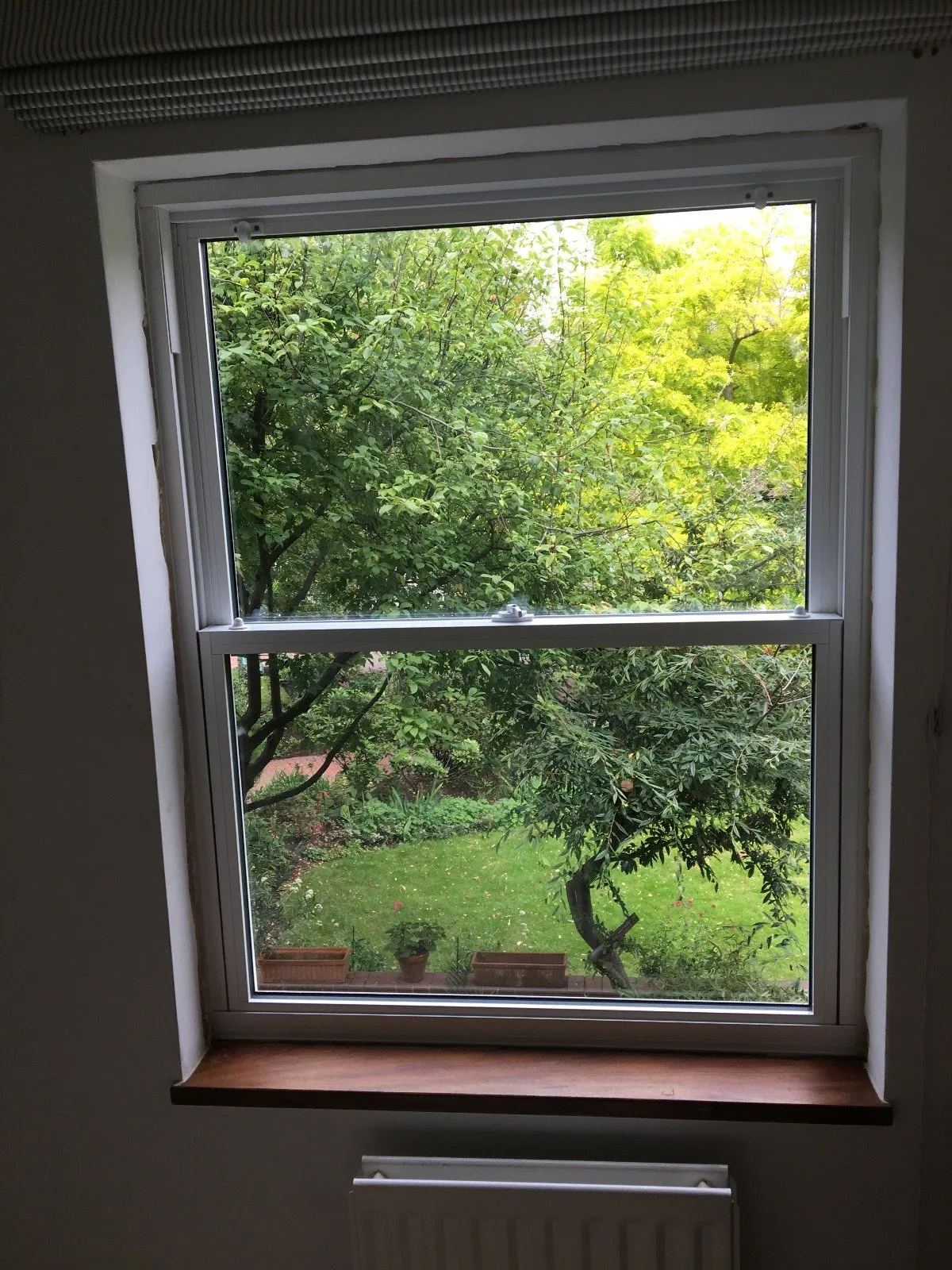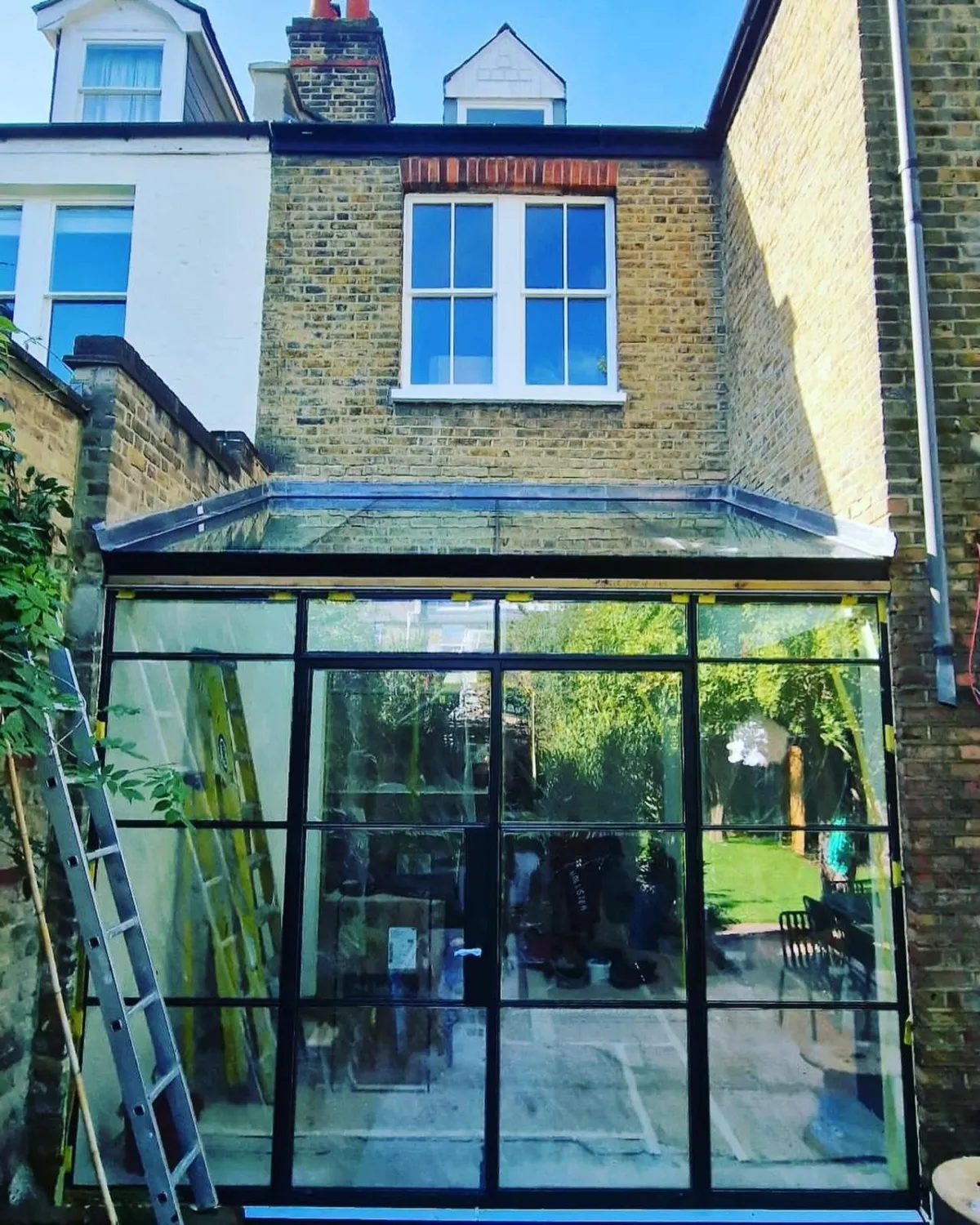
Replacing Sash Windows: Repair, Double Glazing or New Windows?
Replacing sash windows depends on the state of the frames and what you want from them. Historic England says most traditional windows can be repaired; new sashes or new windows suit joinery beyond repair, poor earlier replacements, or a wish for double glazing throughout. In a listed building or a conservation area, ask the council before you order.
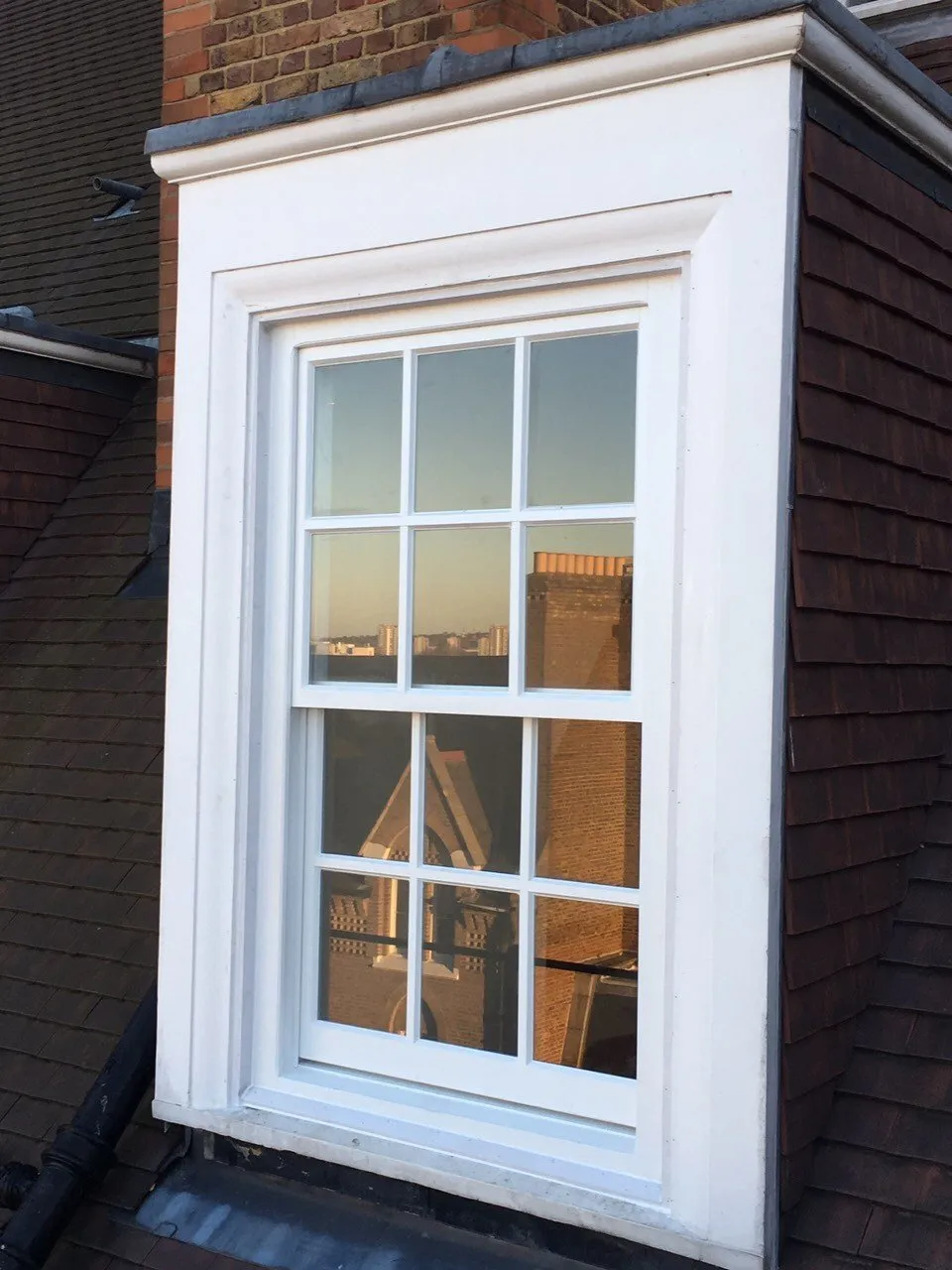
This guide runs from repair to new windows, under English rules. If you already know you want new windows, see our replacement sash windows.
How do sash windows work, and what usually goes wrong?
Each sash hangs on its own cord, which runs over a pulley in the box frame to a hidden weight. The weight and the sash have to be almost the same, so the sash stays where you leave it (Traditional Windows, Historic England, 2017). The counterweighted sash appears to be a British invention. The Building Acts of 1709 and 1774, which applied to the cities of London and Westminster, pushed the box frame back behind the face of the brick, and that look then spread across England.
Common reasons a sash will not move, according to the same guidance, include layers of paint, beads fitted too tightly, seized pulleys, broken cords, swollen timber and heavier replacement glass.
Should you repair or replace sash windows?
Start with a survey of each window. Historic England says traditional windows can often be repaired, usually for much less than the cost of replacement, and that it is rare for every window in an old house to need new sections. Repairs that match the original, such as new timber pieced into a rotten cill or new cords of the same material, do not need listed building consent.
| Problem | Usual fix | Replacement needed? |
|---|---|---|
| Sash stuck or painted shut | Free the sash and remove excess paint | No |
| Broken cord or seized pulley | New cord, pulley cleaned and lubricated | No |
| Rattles and draughts | Draught-proofing in the beads and meeting rails | No |
| Rot in the cill or a rail | Cut out and piece in timber of the same species | Only if it is beyond repair |
| Sash broken beyond repair | New sash made to match, in the existing box frame | The sash only |
| Earlier replacement in the wrong pattern | New window that copies the original design | Yes |
Replacement makes sense when the frame itself has failed, when earlier replacements are of the wrong pattern, or when you want a new double-glazed window with a certified energy rating. In a listed building, a replacement should copy the form, detail and way of opening of the original, which normally means pulleys and weights rather than springs.
Is it cheaper to repair or replace sash windows?
Repair usually costs less at first, but in many cases we find replacement better value; get both quoted and compare what each gives you. For replacement, the HomeOwners Alliance, a consumer group, gives averages credited to Checkatrade of £1,300 for a sash window and £1,490 for a timber sash window (guide updated 8 October 2026). Treat them as indicative: the Checkatrade figures are undated and VAT is not stated.
Ask for the repair quote to show which sashes need new timber and whether the box frames are sound; for replacement, the same guide lists frame material, size and scaffolding as factors.
Can you double glaze existing sash windows?
Often. Historic England's Advice Note 18 (2026) says slim or vacuum double glazing fitted within historic frames will generally be acceptable, unless the window keeps historic glass of interest or its frame and glazing bars cannot carry the new glass. The glazing bars should stay, the window should be refurbished and draught-proofed at the same time, and a sash may need heavier weights to balance the extra weight.
The alternative is new double-glazed sashes made for the existing box frames. Slim units are 10 to 16 mm thick and vacuum units about 6.5 mm, against 22 to 28 mm for standard double glazing (Traditional Windows, 2017).
In a sash with many small panes, the 2026 note adds, secondary glazing often outperforms double glazing, because heat still escapes through the frame and glazing bars.
Approved Document L applies its energy standard to a whole window, frame included: replacing only the glazing, or a window in its existing frame, does not have to meet it. A whole new window should reach a U-value of 1.4 W/m²K or Window Energy Rating band B, and the 2026 edition, in force from 24 March 2027, keeps that figure.
| Option | What stays | What it does | Listed building consent |
|---|---|---|---|
| Repair and draught-proofing | Everything | Cut air leakage through a tested sash by up to 86% | Not for like-for-like repairs or stick-on strips |
| Secondary glazing | The whole original window | Can cut heat loss by over 60% with low-E glass, and reduces noise | Unlikely to be needed |
| Slim double glazing in the old sashes | Sashes and box frames | Less heat lost through the glass; frame and bars still lose heat | Likely to be needed |
| New double-glazed sashes | Box frames | As above, with heavier weights | Likely to be needed |
| New windows | Nothing | Should meet 1.4 W/m²K or band B | Likely to be needed |
Secondary glazing has no seals to fail and, Historic England says, can last 60 to 100 years or more if it is made of good quality wood and maintained, against around 25 years for slim double-glazed units. Internal secondary glazing does not usually need planning permission (Planning Portal).
Do you need permission to replace sash windows in a conservation area?
It depends on the building:
- Listed building: replacing windows, or fitting double glazing into historic frames, is likely to need listed building consent (Advice Note 18). Works that affect the character of a listed building without consent are prohibited under the Planning (Listed Buildings and Conservation Areas) Act 1990.
- House in a conservation area: new windows of similar appearance to those used in the construction of the house do not usually need planning permission, but an Article 4 direction can remove that right, and conservation areas may have extra restrictions. Historic England suggests reading the council's conservation area appraisal first.
- Flat: householder permitted development rights do not apply to flats (government technical guidance), and a leaseholder may first need permission from the landlord or management company.
Where a window in a listed building or conservation area cannot meet the energy standard without spoiling its character, Approved Document L accepts a centre-pane U-value of 1.2 W/m²K or single glazing with low-emissivity secondary glazing.
Are uPVC sash windows a good idea?
It depends on the house. Historic England considers uPVC windows unsuitable for older buildings, particularly listed ones and those in conservation areas: the frames are thicker, and the glazing bars are often plastic strips inside the sealed unit. It also gives them a service life of under 25 years.
In a later house, or where the council has no objection, the choice is yours: our guide to uPVC vs wooden windows compares the two, and you can see uPVC windows and wooden windows side by side.
What should you check before replacing sash windows?
- Survey each window: price repair and replacement window by window.
- What will be copied: sash profiles, glazing bars, horns and the way the window opens. Bars that divide separate panes look different from bars fixed to one sealed unit.
- Performance: for a whole new window, ask for the certified U-value or Window Energy Rating.
- Vents: if the old windows had trickle vents, the new ones need vents at least as large; if they had none, ventilation must be no worse than before, which can mean adding vents (Approved Document F).
- Escape: where a window is an escape window, the replacement should give at least the same potential for escape, or the minimum opening if the old one was larger than needed (Approved Document B).
- Certification: a registered installer can self-certify the work; the government list of competent person schemes shows which schemes cover replacement windows.
For other window types, see our guide to types of windows.
Frequently Asked Questions
How long do sash windows last?
Well-maintained traditional windows often last more than 100 years, and Historic England notes historic components still working after 150 to 250 years. The sealed units in double glazing are expected to last 15 to 25 years before their seals fail, so a double-glazed sash may need new glass long before it needs new timber.
Can you replace just the sashes and keep the frames?
Yes, if the box frames are sound. New sashes, single or double glazed, can be made for the existing frames, and heavier glass means heavier weights to balance them. Approved Document L applies its energy standard to whole windows, so a window replaced in its existing frame does not have to meet it.
Do I need listed building consent to repair sash windows?
Not for like-for-like repairs. Historic England says piecing in matching timber, renewing broken cords with the same material and adding stick-on draught strips do not need consent. Replacing a window, or fitting double glazing into historic sashes, is likely to need it. Ask the council's conservation officer if you are unsure.
How does secondary glazing compare with double glazing in sash windows?
Historic England's research found low-emissivity secondary glazing can cut heat loss as well as double glazing, and it reduces noise better. It leaves the original window untouched and usually needs neither planning permission nor listed building consent, but it adds a second layer to open for cleaning and fresh air, where double-glazed sashes have one.
Should I replace all my sash windows at once?
Not necessarily. The HomeOwners Alliance says you do not need to replace every window in one go, and Historic England finds it is rare for all the windows in an old house to need new sections. A survey of each window shows which to repair and which to replace.
Sources
- Modifying Historic Windows as Part of Retrofitting Energy Saving Measures, Historic England, updated 23 July 2024
- Adapting Historic Buildings for Energy and Carbon Efficiency: Advice Note 18, Historic England, 16 February 2026
- Traditional Windows: their care, repair and upgrading, Historic England, 2017 (under review)
- Doors and windows: planning permission, Planning Portal, page undated
- Approved Document L: Conservation of fuel and power, Volume 1: Dwellings, UK government, 2021 edition incorporating 2023 amendments
- Approved Document L: Energy and greenhouse gas emissions (2026), UK government, updated 8 September 2026, in force from 24 March 2027
- Planning (Listed Buildings and Conservation Areas) Act 1990, section 7, legislation.gov.uk
- When is permission required?, planning practice guidance, UK government, updated 26 July 2023
- Permitted development rights for householders: technical guidance, UK government, September 2019
- Replacing Windows: What To Expect, HomeOwners Alliance (consumer group), updated 8 October 2026
Final Thoughts
Start with a survey of each window, then choose between repair, new glass and new sashes or windows on its condition and on what you want from it. We repair sash windows, but replacement is often better value than repair; we also replace glass, and we do not fit secondary glazing.
If new windows are the answer, our sash windows are made to measure with traditional proportions and modern double glazing. We make them in timber, uPVC and aluminium, and timber is the most popular choice. Compare material samples and finishes at our showroom in Fulham, or ask for a free estimate.