Sash Window Styles: Georgian, Victorian and Edwardian Explained
Sash window styles follow the glass of each period. Georgian sashes often had six panes over six, divided by glazing bars; cheaper plate glass from the 1830s brought larger panes, two over two and horns; and late Victorian and Edwardian houses might have one over one or, with the Queen Anne revival, small panes in the top sash.
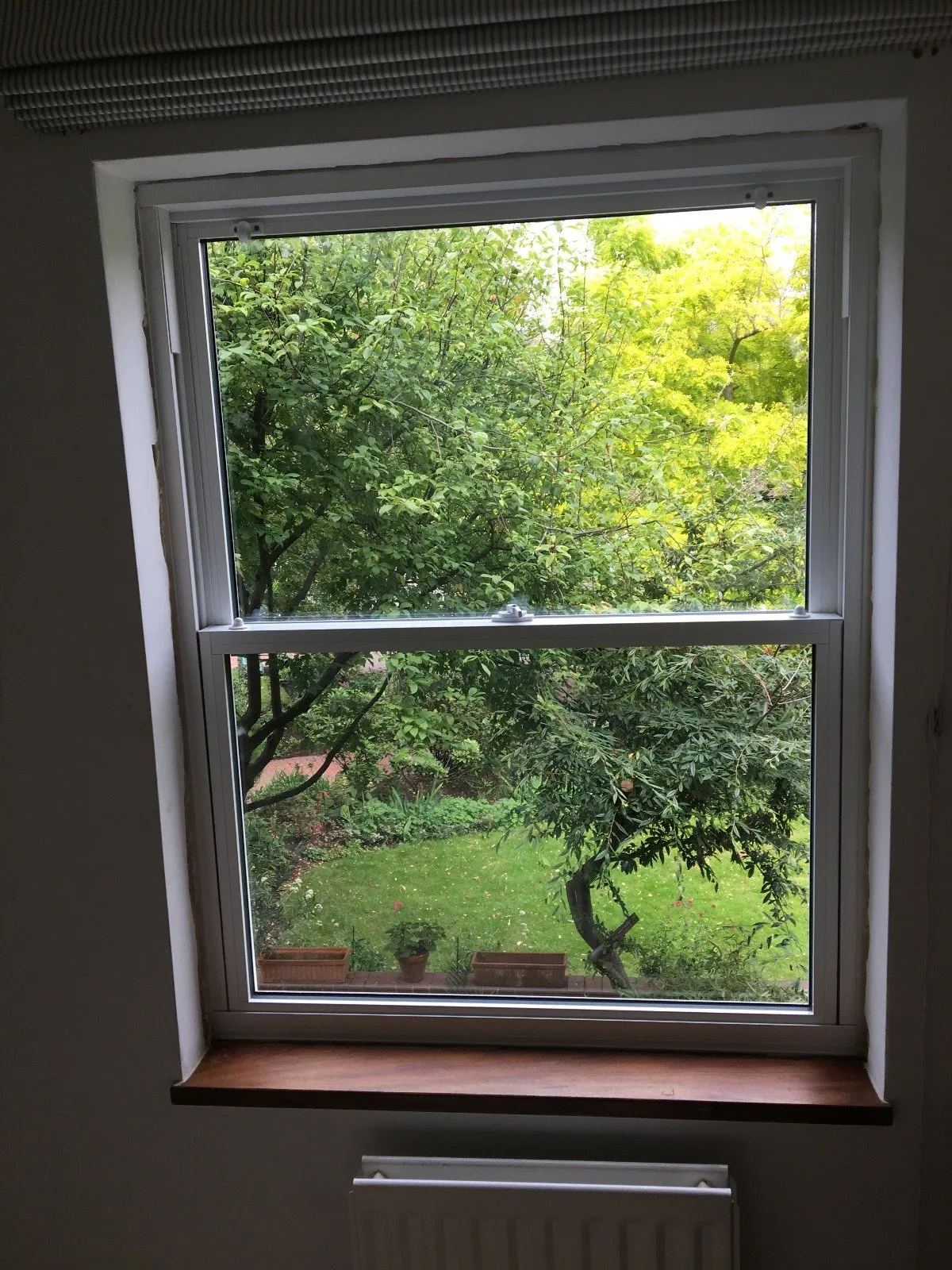
Knowing the pattern your house was built with helps when you repair, replace or add windows, and it can decide whether you need planning permission, especially in a conservation area. With our sash windows made to measure, you choose the sash style, glazing and finish before the final measurements are taken.
What are the main sash window styles?
Four details help date a sash window: how many panes each sash has, how thick the glazing bars are, the glass, and whether the top sash has horns, the short extensions of its side frames below the meeting rail. Traditional Windows (Historic England, 2017) traces how each changed, largely with the glass.
| Period | Typical pattern | Glazing bars and glass | Horns |
|---|---|---|---|
| Early 18th century, including early Georgian | Small panes, sometimes a curved top | Thick ovolo bars, mostly softwood; the earliest bars, usually oak, were often almost 40 mm | No |
| Georgian, square-headed, from about 1730 | Square heads, often six over six | Softwood bars, getting thinner; by the early 19th century some only 12 mm wide; crown glass | No |
| Victorian, from the 1830s | Fewer, larger panes; two over two is typical | Cheaper, stronger plate glass needs fewer bars | Introduced to strengthen the meeting rail joints |
| Late Victorian and Edwardian | One over one, or small panes in the top sash | Large panes; thick bars return in the top sash with the Queen Anne revival | Needed where large panes leave the meeting rail without support |
Treat the table as a guide. Historic England says six over six was common but "by no means the rule", and that panes were sometimes broader than they were tall.
How do you recognise a Georgian sash window?
Early 18th century windows were fairly small, with thick bars and small panes, and by 1730 square-headed windows, which were cheaper to make, had largely replaced gauged-brick arched ones. The size of each window was usually kept in proportion with the rest of the front of the house.
The glazing bars then get finer. The earliest were robust oak, often almost 40 mm thick; softwood followed, with ovolo, lamb's tongue and pointed mouldings, and by the early 19th century some bars were only 12 mm wide, though up to 38 mm deep for strength.
In London, building law shaped the look. The Building Act of 1709 required the box frame to sit at least four inches behind the face of the wall, and in 1774 this became nine inches, so nearly the whole frame was hidden. The rules covered only the cities of London and Westminster, but the style spread across England within about twenty years. With very slender bars, it gave windows a lighter, more delicate appearance.
Georgian sashes were glazed with crown glass, which is slightly rippled and may hold small bubbles. Early 18th century windows were usually painted white or stone; by 1770 more modest homes were beginning to try green, grey, brown, black and graining.
What makes a Victorian sash window different?
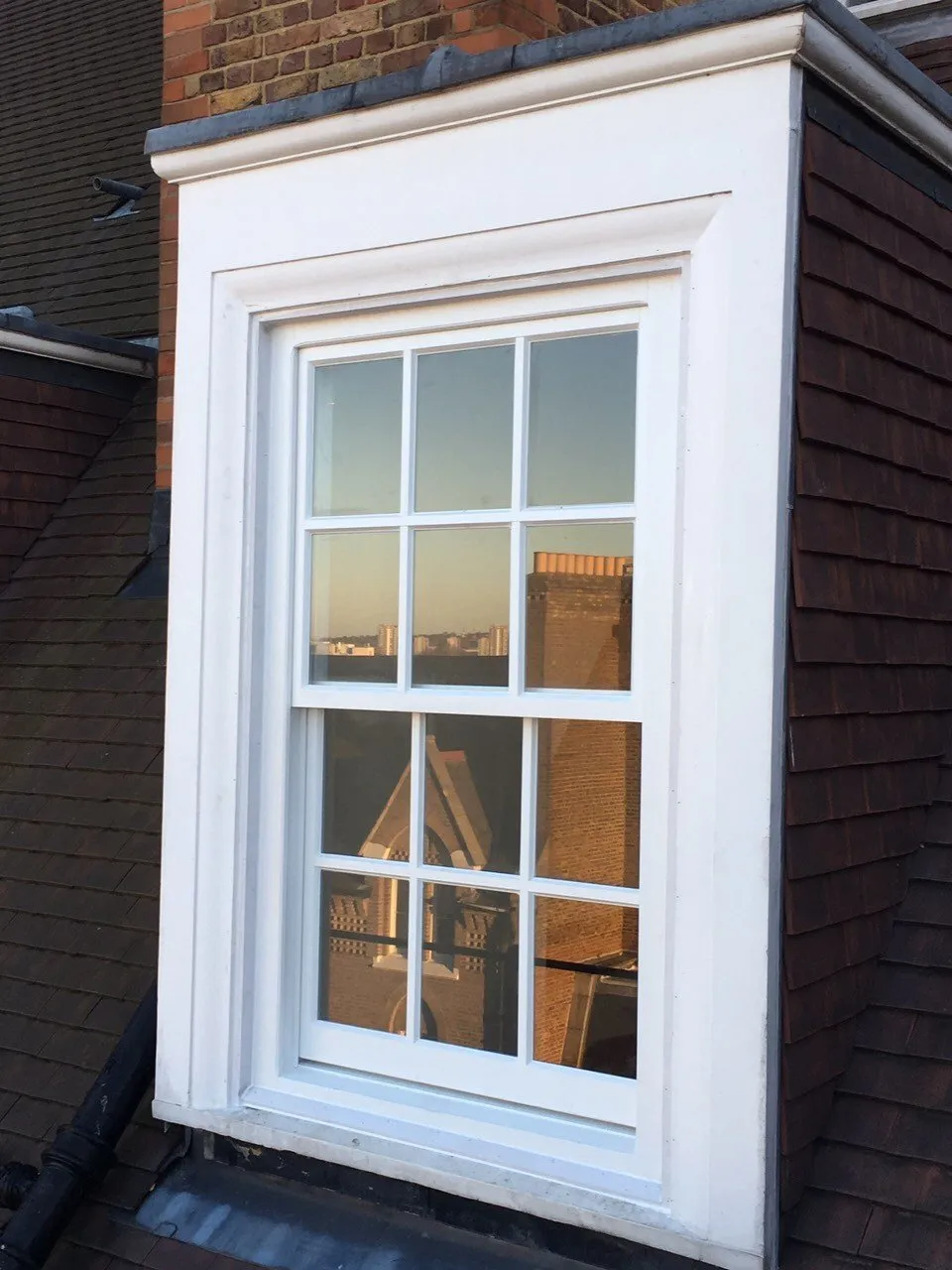
Glass. Cheaper and stronger plate glass from the 1830s meant fewer glazing bars and clearer views, and Historic England describes two panes per sash, two over two, as a more typically Victorian pattern than the Georgian six over six. Crown glass went out of wide use in the middle of the 19th century, when the tax on glass by weight ended and cylinder glass became cheaper.
Bigger panes made sashes heavier, and without bars to support the meeting rail the joints at each end came under strain. That is where horns came from: extensions of the side frames of the top sash that strengthen those joints. If your sashes have horns, the sashes themselves were probably made in the Victorian period or later, even if the house is older.
The fittings changed too. Sash lifts, once found mainly in grander houses, became essential on the heavier windows of the 1830s onwards. Georgian sashes ran on cotton cords, while some substantial later 19th century houses used chain. Paint moved towards purple-brown and Brunswick green by the middle of the century, with oak graining still popular.
What do Edwardian sash windows look like?
Two patterns stand out at the end of the period. One over one, with a single pane in each sash, is Historic England's example of a late Victorian or Edwardian sash window. At the end of the 19th century, the Queen Anne revival brought back small panes and thick glazing bars, particularly in the upper sash, so small panes in the top sash over a single large pane below are a sign of these later houses.
Historic England stresses that window design matters as much to the character of these later buildings as to Georgian ones. Fittings stayed traditional too: many makers produced Victorian style fittings into the 1930s, and the spiral sash balance was only patented in 1930, so an original double-hung sash from these periods will normally run on cords or chains and weights.
How do you match new sash windows to the style of your house?
Start with the pattern the house was built with, then check the rules. The Planning Portal says new windows of similar appearance to those used in the construction of the house do not usually need planning permission. For a different pattern, ask your council first; an Article 4 direction can remove the right altogether. In a listed building, works that affect its character need consent under the Planning (Listed Buildings and Conservation Areas) Act 1990.
For a listed building, Historic England asks that a window beyond repair is replaced with one that matches the form, detailing and operation of the window it copies, normally with pulleys and weights rather than springs. Our sash windows run on weights and pulleys, and we use spring balances mainly where the wall has no room for the weight boxes. Its Advice Note 18 (2026) says double-glazed replacements of the right material and glazing bar pattern will generally be acceptable, with listed building consent, for windows that add nothing to a building's interest, but that stuck-on bars rarely replicate historic character. So ask how the bars on a quote are made.
Small details give a pattern away. Georgian sashes predate horns, and the Fitch pattern fastener only arrived in the late 19th century, so Historic England calls it historically inaccurate on a Georgian window. Old glass is worth keeping where it survives, because crown glass has not been made since the early 20th century.
Material matters as well. We make sash windows in timber, uPVC and aluminium; timber, made from pine, is the most popular choice. We give a guarantee of up to 30 years on selected timber sash windows. Our wooden windows can copy the slim frames, glazing bars and sliding sashes of Georgian, Victorian and Edwardian houses closely. Historic England considers uPVC unsuitable for older buildings, particularly listed ones and those in conservation areas. Where no such rules apply, uPVC windows and aluminium windows are options to compare with timber.
If you are still deciding whether to repair or replace, our guide to replacing sash windows covers that choice, and types of windows explains how a sash works.
What should you note before asking for a quote?
- Count the panes in each sash, top and bottom, on every elevation.
- Check whether the top sash has horns.
- Measure the width of a glazing bar from inside.
- Look for old glass with ripples or small bubbles, and say if you want to keep it.
- Note whether the box frame sits behind the brick or is visible on the face of the wall.
- Find out whether the house is listed, in a conservation area or covered by an Article 4 direction.
- Photograph the front of the house and any neighbours that still have their original windows.
Frequently Asked Questions
What era are sash windows from?
Vertically sliding sashes appeared in England in the mid 17th century, probably from France, with a fixed top sash. The double-hung sash with hidden counterweights appears to be a British invention, and Historic England dates the earliest surviving example to about 1701. Sash windows then ran through Georgian, Victorian and Edwardian houses.
What are sash window horns for?
Horns are short extensions of the side frames of the top sash, below the meeting rail. They strengthen the joints at each end of that rail, which lost the support of glazing bars once cheaper, heavier plate glass arrived from the 1830s. Historic England also ties them to the larger, heavier panes of the late 19th century.
Are six over six sash windows always Georgian?
No. Six over six was common in the Georgian period, but small panes came back, mainly in the upper sash, with the Queen Anne revival at the end of the 19th century, and new windows copy the pattern too. So look at the glazing bars, the glass and whether there are horns before dating a window.
Can I fit Georgian style sash windows in a Victorian house?
Possibly, but check first. Planning permission is not usually needed for new windows that look similar to those the house was built with, so ask your council about a different pattern. An Article 4 direction can remove that right, and replacing a historic window in a listed building needs listed building consent.
Should I keep the old glass in my sash windows?
Keep it where you can. Historic England says historic glass should always be retained, and crown glass has not been made since the early 20th century. Old glass has slight ripples or bubbles that give a front depth. Chipping out hard old putty risks cracking the pane, so ask for careful removal if a sash needs work.
Sources
- Traditional Windows: their care, repair and upgrading, Historic England, 2017 (under review)
- Adapting Historic Buildings for Energy and Carbon Efficiency: Advice Note 18, Historic England, 16 February 2026
- Modifying Historic Windows as Part of Retrofitting Energy Saving Measures, Historic England, updated 23 July 2024
- Doors and windows: planning permission, Planning Portal, page undated
- When is permission required?, planning practice guidance, UK government, updated 26 July 2023
- Planning (Listed Buildings and Conservation Areas) Act 1990, section 7, legislation.gov.uk
Final Thoughts
Date your windows by the panes, bars, glass and horns together, then match the pattern the house was built with, especially in a conservation area or a listed building.
We make sash windows in timber, uPVC and aluminium to the pattern you choose. See material samples and finishes at our showroom in Fulham, or ask for a free estimate.