Crittall Window Repairs in London: What Can Be Fixed and When to Replace
Crittall window repairs deal with rust, failed putty, stiff casements and worn hinges, and Historic England says even steel windows that look bad can often be repaired. New windows suit steel that is past saving. We look after and repair the Crittall windows we have fitted, and for older steel windows we offer new ones with the same look.
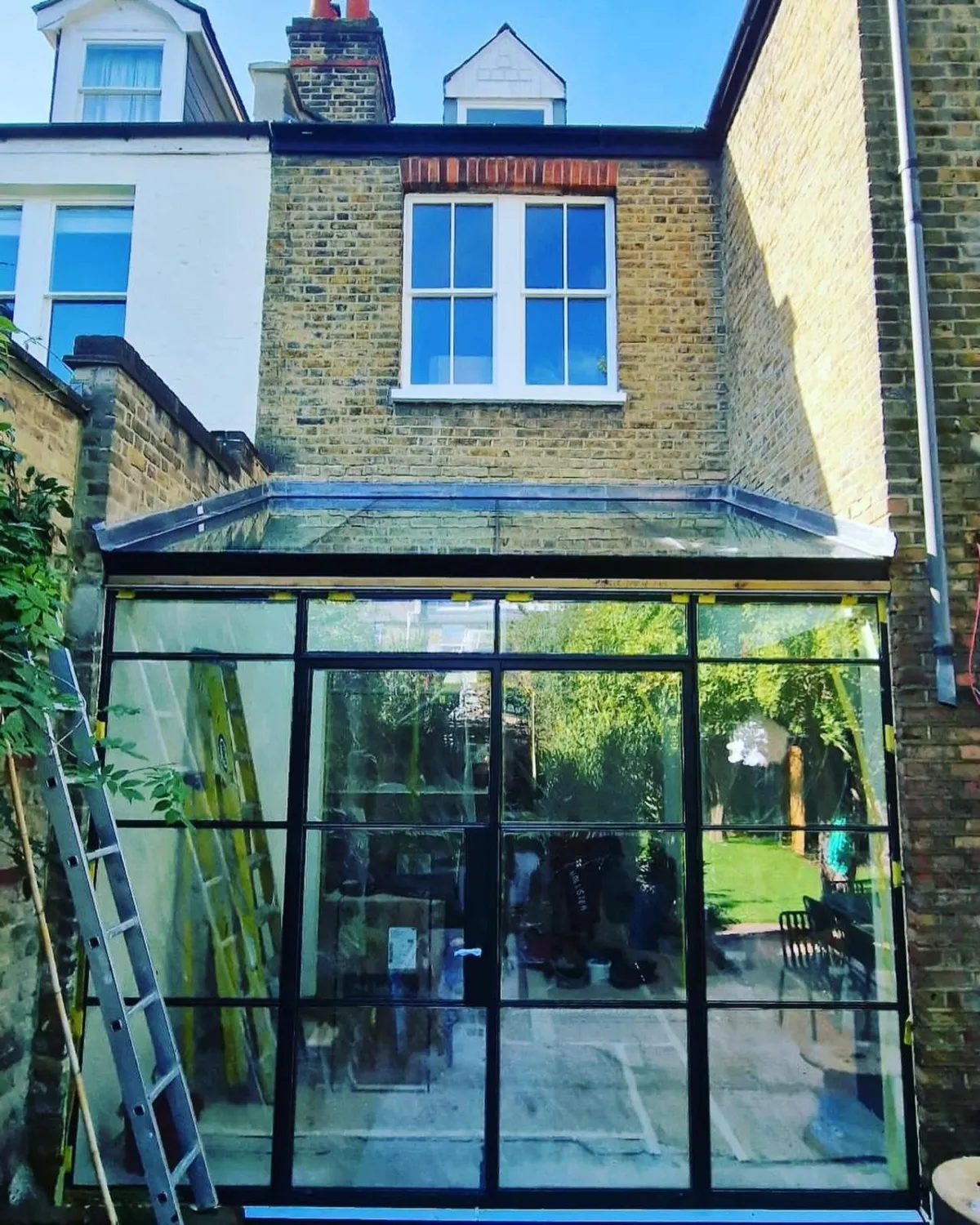
We fit original Crittall windows, which are steel, and make our own industrial style windows in steel or lower-cost steel-look aluminium; all are double glazed. For older steel windows fitted by others, we offer new windows rather than repairs; this guide explains what can be fixed, and when new is better.
Crittall Windows Ltd uses its trade mark only for windows it made, but many people use the name for any old steel window; the repairs below apply to all of them.
What goes wrong with old Crittall windows?
When inspecting old metal windows, Traditional Windows (Historic England, 2017) asks you to look for corrosion, a distorted frame, casements that will not move, and cracked or missing pointing round the frame, which lets in damp and draughts.
| Problem | What you see | The usual repair |
|---|---|---|
| Surface rust | Flaking or blistered paint, often the first sign | Rub down, prime with a zinc-rich metal primer, repaint |
| Deeper corrosion | Rust on the horizontal glazing bars and bottom rails, common on windows made before the 1950s | Rake out and fill smaller losses; cut out badly corroded sections and fit matching ones, welding only off site |
| Cracked glass | A cracked pane beside rusting steel, pushed by the expanding rust | Remove the rust, then reglaze with metal casement putty |
| Failed putty | Cracked or missing putty, water sitting on the frame | New metal casement putty, so water cannot reach the steel |
| Stiff or jammed casement | A casement that will not open or close properly | Remove paint build-up, free and ease it, repair or replace hinges and fittings |
| Distorted frame | A casement out of line, with uneven gaps | Leave it if the window works safely; otherwise ease slight distortions back with the glass in; larger ones usually need the glass out first |
| Draughts | Gaps round the casements or the frame | A silicone compression seal in the gaps; repoint the joint with the wall |
Rust swells to as much as seven times the volume of the metal, so it often looks worse than it is. Historic England says a window that looks thoroughly rusted may have decades of life left.
How do you tell if your steel windows are galvanised?
Look for a tough, silvery finish under the paint. From around 1945 it became the practice to galvanise steel windows after they were made, by dipping them in molten zinc, and Historic England says those made from the mid-1950s onwards will probably be galvanised. Windows made before the 1950s were generally not, which is why they rust more.
On a galvanised window, Historic England says repair should be relatively straightforward: excess paint comes off, including from hinges and moving parts, and damaged hinges or fittings can be replaced, without harming the zinc. Corrosion in ungalvanised windows is likely to be more severe, and the first decision is whether to repair them where they are or in a workshop.
Which repairs are done on site, and which in a workshop?
On site, rust and scale are removed with wire brushes, files and small grinders. In a workshop, windows can be grit or shot blasted and then galvanised, or zinc-sprayed if they are fragile. Badly corroded sections can be cut out and replaced, provided a steel fabricator can find or make matching sections, but Historic England says welding should only be done off site, so it suits parts that can be safely removed and refitted. Ungalvanised windows should be recorded before any of this starts.
Can old steel windows be draught-proofed?
Often. For metal windows with irregular gaps, Historic England describes a compression seal made from silicone gel: the gel goes on the frame, a release agent on the casement, and the window is closed to shape the seal, which is then trimmed. In its tests on two steel windows, draught-proofing cut air infiltration by over 95%.
It does not always work. Historic England's guidance on secondary glazing notes that many metal windows have gaps too large to seal. Its Advice Note 18 (2026) says draught-proofing will almost always be acceptable in a listed building, and that windows should be repaired before they are draught-proofed. Our guide on whether Crittall windows can be double glazed compares the glazing options for old frames.
When are new windows a better choice than repair?
Restoration keeps the original windows and is often economical. New windows are the better choice when:
- Repair is not technically or economically viable, for example when corrosion runs through many sections of an ungalvanised frame.
- The windows are later replacements that do not suit the house.
- You want the performance of a new window. Historic England's tests found heat through the steel frame greatly limited the gain from fitting slim double glazing into old frames; in the same tests, blinds and secondary glazing cut heat loss by as much as 54% and 62%.
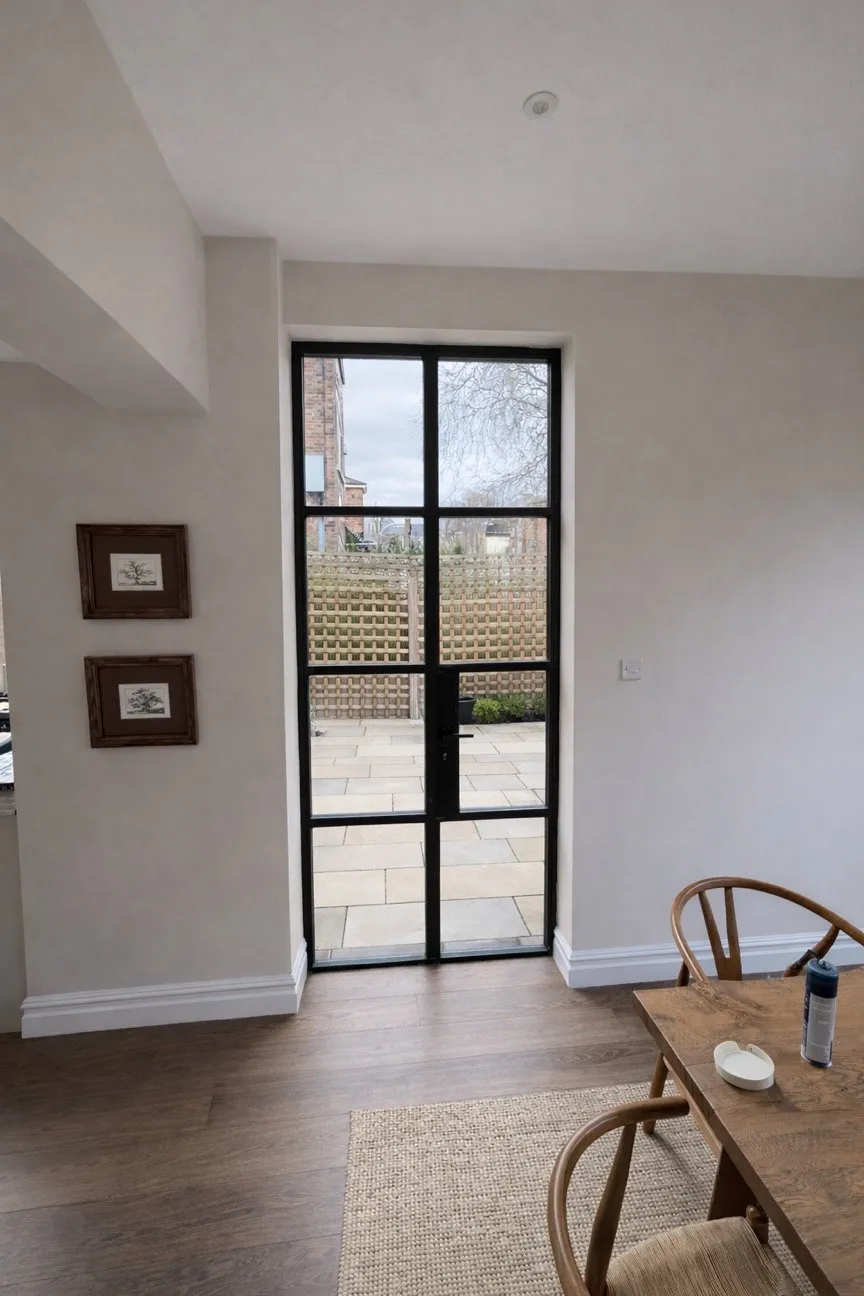
- You want the same look in a new, durable finish: steel windows of a very similar pattern are still made, powder coated.
A whole new window has to meet Approved Document L: a U-value of 1.4 W/m²K or Window Energy Rating band B, or a centre pane U-value of 1.2 W/m²K where the character of the building must be kept, and an installer registered with a competent person scheme can certify the work. Replacing only the glass in an existing frame does not have to meet that standard.
For older steel windows, we offer new original Crittall windows in steel or our own industrial style windows, double glazed and with the same look, with slim frames and glazing bars in RAL colours such as matte black, anthracite grey and bronze. We also make aluminium windows in other styles, and our guide to steel-look windows covers style and cost.
Check the rules first. In a house, new windows of similar appearance do not usually need planning permission, according to the Planning Portal, but an Article 4 direction can change that, a conservation area may add restrictions, and a leaseholder may need the landlord's permission. In a listed building, Advice Note 18 accepts double-glazed replacements of the right material and pattern only for windows that add nothing to its interest, and consent is likely to be needed.
How do you keep steel windows in good order?
Keep water away from the steel. Historic England says corrosion is best prevented by keeping the building watertight and the metal protected by paint or another coating. Treat surface rust early and replace cracked putty before water gets behind it.
Watch the joint between the frame and the wall: Historic England says it was traditionally filled with lime mortar and that aerosol foam fillers should not be used, as they can trap moisture. On galvanised windows, take care not to damage the zinc.
For the Crittall windows we have supplied and fitted, contact us for aftercare.
What should you check before you ask for a quote?
- Look for a silvery zinc layer where the paint has chipped.
- Note which windows have flaking paint, rust, cracked panes, failed putty or stiff casements, and photograph them inside and out.
- Check the pointing round each frame for cracks or gaps.
- Find out whether the house is listed, in a conservation area or covered by an Article 4 direction.
- If you are weighing up replacement, ask for a quote for new windows with the same lines.
Frequently Asked Questions
Can the glass in a Crittall window be replaced?
Yes. The rebate is cleaned and primed, and the new pane is bedded in metal casement putty, fixed and sealed. Approved Document L says new glass alone in an existing frame does not have to meet its energy standard. Historic England warns that chipping out old putty risks cracking the glass.
Do Crittall windows need repainting?
Yes, if they are painted. Historic England puts repainting of metal windows on a five to eight year cycle, and on ungalvanised steel the paint is what keeps water off the metal. Galvanising protects steel without further painting, and by the 1970s many makers added a polyester powder coat, which lasts much longer than paint applied on site.
Do I need consent to repair steel windows in a listed building?
Under the Planning (Listed Buildings and Conservation Areas) Act 1990, consent is needed for works that would affect a listed building's character, so careful like-for-like repair may not need it; ask your council's conservation officer first. Historic England's 2026 advice says listed building consent is unlikely to be needed for draught-proofing, while replacing windows is likely to need it.
Can new windows look like old Crittall windows?
Yes. Historic England notes that steel windows of a very similar pattern are still made, with a durable powder-coated finish. We fit original Crittall windows in steel and make our own industrial style windows in steel or lower-cost steel-look aluminium, all double glazed, with slim frames and glazing bars.
Do you repair Crittall windows fitted by other companies?
No. We look after and repair the Crittall windows we have supplied and fitted ourselves. For older steel windows fitted by others, we offer new windows instead: we can survey them and quote for original Crittall windows or our own industrial style windows, with the same slim lines and double glazing.
Sources
- Traditional Windows: their care, repair and upgrading, Historic England, 2017 (under review)
- Adapting Historic Buildings for Energy and Carbon Efficiency: Advice Note 18, Historic England, 16 February 2026
- Energy Efficiency and Historic Buildings: Secondary glazing for windows, Historic England, 2016
- Approved Document L: Conservation of fuel and power, Volume 1: Dwellings, UK government, 2021 edition incorporating 2023 amendments
- Competent person scheme: current schemes and how schemes are authorised, UK government
- Doors and windows: planning permission, Planning Portal, page undated
- When is permission required?, planning practice guidance, UK government, updated 26 July 2023
- Planning (Listed Buildings and Conservation Areas) Act 1990, section 7, legislation.gov.uk
- The Crittall Trademark, Crittall Windows Ltd (manufacturer), page undated
Final Thoughts
Look closely at each window before you decide. Sound steel, especially galvanised steel, can often be restored; where corrosion has gone too far, or you want a new window's performance, new windows can keep the same lines.
We look after the Crittall windows we have fitted, and for older steel windows we quote for original Crittall or our own industrial style windows. See samples and finishes at our showroom in Fulham, or ask for a free estimate.
Crittall is a registered trade mark of Crittall Windows Ltd. No1 London is an independent company and is not affiliated with Crittall Windows Ltd.