Are Timber Windows Sustainable? Sourcing, Lifespan and Upkeep
Are timber windows sustainable? They can be, when the wood comes from a legal, certified source you can check, the window is built and finished to last for decades, and it is repaired rather than thrown out early. Wood stores carbon while it is in use, but regular repainting is the price of that long life.
We supply and fit bespoke wooden windows, including traditional sash windows, as well as uPVC windows. This guide covers sourcing, lifespan, upkeep and what to ask before you order. Rules quoted are for England.
What makes a timber window sustainable?
The Green Claims Code from the Competition and Markets Authority warns that words such as "eco" or "sustainable" on their own give no real indication of what is meant. So it helps to break the question into parts you can check.
| Factor | What to look for | Why it matters |
|---|---|---|
| Where the wood comes from | Legal timber, ideally FSC or PEFC certified, with a certificate code you can look up | Certification covers how the forest is managed and tracks the wood to the product |
| Timber and treatment | Durable heartwood, or softwood treated with preservative | Sapwood is not durable, and the risk of decay rises when wood gets wet |
| Finish and upkeep | A factory finish and a repainting interval in writing | The paint or stain is what keeps water out of the wood |
| Repairs | Sections that can be cut out and replaced | A repaired window keeps its frame in use for longer |
| Energy | A certified U-value or Window Energy Rating for the whole window | In the government's energy rating method, the glazing makes most of the difference |
| End of life | Old frames sent for recycling or recovery | Recycled wood keeps its carbon stored for longer |
Where does the wood come from?
Timber for windows sold in Great Britain has to be legally harvested. Under the UK Timber Regulations, the business that first places timber on the market must carry out due diligence on the species, the supplier, the country of harvest and the risk that it was cut illegally. Builders' joinery, the customs heading that includes wooden windows and their frames, is within scope. Legal is only the minimum, though, and the Green Claims Code says a business should not present a legal requirement as an environmental benefit.
Certification goes further. FSC and PEFC both set a forest management standard, checked by independent auditors, then track certified wood through every business that handles it, which is called chain of custody. FSC uses three labels:
- FSC 100%: all the wood comes from FSC-certified forests
- FSC Mix: a mixture of certified wood, recycled material and/or "controlled wood", which is not from certified forests but is assessed as low risk for unacceptable sources
- FSC Recycled: all of it is recycled material
A logo in a brochure is not proof for your window. Ask for the supplier's certificate code on the quote or invoice (FSC codes look like XX-COC-000000) and look it up in FSC's public certificate search. A PEFC label carries a licence number you can check in PEFC's Find Certified database.
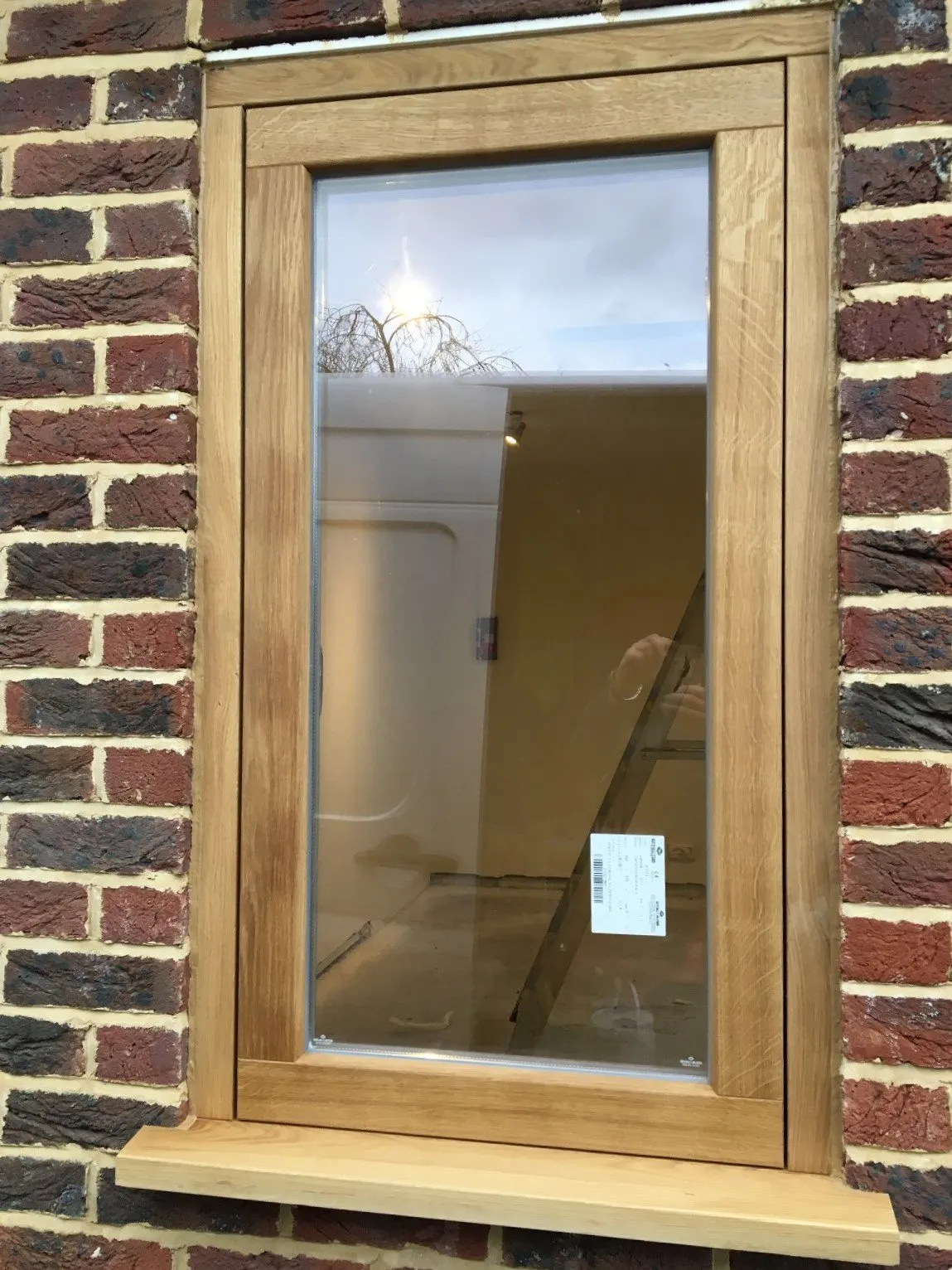
How long do timber windows last?
Decades, if they are made from the right wood and looked after. A 2013 study by Heriot-Watt University, commissioned by the Wood Window Alliance, a timber window trade group, estimated a service life of 56 to 65 years for timber windows, 68 to 80 years for acetylated (chemically modified) timber and 71 to 83 years for aluminium-clad timber. The figures are modelled, not observed, for factory-finished windows built to Wood Window Alliance standards, with plain timber repainted every 5 to 7 years.
Historic England says many well-maintained traditional windows survive for more than 100 years, and its 2017 guidance notes some components still in use after 150 to 250 years. Most old sashes were made from slow-grown pine heartwood. Timber used today is more likely to contain sapwood, the industry's Wood Protection Association says, so window softwood is usually treated with preservative, or a more durable or modified wood is used.
Repainting intervals depend on the finish and how exposed the window is: Historic England's 2017 guidance suggests every 5 to 8 years for traditional painted windows, the British Woodworking Federation, the joinery trade body, says some factory opaque finishes last 8 to 10 years, and translucent stains typically need redoing every 3 to 5 years. Our comparison of uPVC vs wooden windows lists what to inspect each year.
Should you repair old timber windows or replace them?
Repair first, where the frames allow it. Historic England says most traditional windows can be repaired, even ones in very poor condition, and its 2017 guidance adds that repair usually costs much less than replacement.
Old windows can also be made much warmer. In tests on timber sash windows for Historic England and Historic Environment Scotland:
- Draught-proofing cut air leakage by as much as 86% on the window tested
- Secondary glazing with low-emissivity glass cut heat loss by around 60%
- Thick curtains cut heat loss by 41%, and shutters performed almost as well as secondary glazing
Those results come from two test windows, not a promise for yours. If the house is listed or in a conservation area, check with the council before changing anything, and see our guide to types of windows for the replacement rules.
Are wooden windows energy efficient?
They can be, and in England they must meet the same standard as any other frame. Under Approved Document L, a new or replacement window in an existing home should reach a U-value of 1.4 W/m²K or a Window Energy Rating of Band B. Timber had a temporary allowance of 1.6, which ended on 14 June 2023.
Wood itself conducts little heat: BRE gives softwood a value of 0.13 W/m·K against 160 for aluminium, which is why metal frames need a thermal break. In SAP 10.3, the government's energy rating method, wood and uPVC frames share the same default figures, and a metal frame with a thermal break comes out a little worse. The glass makes a far bigger difference: SAP's default U-value for a wood or uPVC window falls from 4.8 single glazed to 1.3 with argon-filled triple low-emissivity glazing. Compare the certified figure for the exact window, not the material.
What happens to timber windows at the end of their life?
Most UK waste wood is now recovered. The Wood Recyclers' Association, the industry body, reports that 89% of the waste wood generated in 2025 went to reuse, recycling or recovery. Most was burned for energy in biomass plants, and about 927,000 tonnes was recycled into panel board.
Old painted or treated frames were long handled with caution, because some past preservatives contained hazardous substances. Since late 2024, the association's guidance classes old external joinery as non-hazardous when it goes to panel board or to biomass plants meeting waste incineration standards, and it says the UK environmental regulators support this. The business that removes the frames still has to classify the waste under government guidance, so ask where your old frames will go.
About half the weight of dry wood is carbon, Forest Research figures show, and its carbon glossary notes it stays out of the atmosphere only until the wood is burned or decays. Recycling keeps it stored for longer.
What should you ask before you order timber windows?
- Where is the wood from? Ask for the species, the country of harvest and the FSC or PEFC certificate code, then check the code yourself.
- How is it protected? Ask whether it is heartwood, whether softwood is treated with preservative, or whether a durable or modified timber is used.
- What is the finish? Get the type of finish and the first repaint date in writing.
- How warm is it? Ask for the certified U-value or Window Energy Rating of the whole window.
- Can it be repaired? Ask whether sections, glazing units and hardware can be replaced on their own.
- Where do the old windows go? Ask who takes them away and whether they are recycled.
Frequently Asked Questions
Do timber windows store carbon?
Yes, while the wood lasts. About half the weight of dry wood is carbon, and denser timbers hold more: Forest Research says oak holds about 70% more carbon per cubic metre than spruce. That carbon returns to the atmosphere when the wood is burned or decays, so a long service life and recycling keep it stored for longer.
Do timber windows need to be FSC certified?
No. The law requires timber to be legal, and the UK Timber Regulations make the business that first places it on the market check that it is. FSC and PEFC certification is voluntary and goes further, covering how the forest is managed. FSC UK itself says certification helps with the legal checks but is no automatic pass.
Is hardwood better than softwood for windows?
Not automatically. What matters is the durability of the heartwood and how the timber is treated. European redwood, a softwood, is one of the most common window timbers in the UK and must be preservative treated for this use. Some hardwoods are unsuitable outdoors: the British Woodworking Federation names American white oak as one.
What is acetylated wood?
It is softwood that has been chemically modified to make it far more resistant to decay. Historic England describes it as exceptionally durable and dimensionally stable, which means it moves less as the weather changes. In the 2013 Heriot-Watt study for the Wood Window Alliance, acetylated frames had an estimated service life of 68 to 80 years.
Are timber windows better for the environment than uPVC?
On the evidence we found, making a timber frame usually has a lower carbon footprint than making a uPVC one, although the main UK study was commissioned by the timber window industry. Over a window's life, the heat lost through it usually matters more, so a long-lasting, well-fitted window of either material is the bigger gain. See our guide to whether uPVC windows are bad for the environment.
Sources
- Approved Document L: Conservation of fuel and power, Volume 1: Dwellings, UK government, 2021 edition incorporating 2023 amendments
- Regulations: timber and FLEGT licences, Office for Product Safety and Standards and Defra, updated 20 August 2025
- Green Claims Code: making environmental claims on goods and services, Competition and Markets Authority, 2021
- SAP 10.3: the Government's Standard Assessment Procedure for Energy Rating of Dwellings, BRE, June 2026
- BR 443: Conventions for U-value calculations, BRE, 2019 edition
- Modifying Historic Windows as Part of Retrofitting Energy Saving Measures, Historic England, updated 23 July 2024
- Traditional Windows: their care, repair and upgrading, Historic England, 2017 (under review)
- Climate change and forest carbon, Forest Research factsheet, 2023
- Whole life analysis of timber, modified timber and aluminium-clad timber windows, Heriot-Watt University for the Wood Window Alliance (timber industry), 2013
- UK waste wood sector proved resilient in 2025, Wood Recyclers' Association (industry body), June 2026
Final Thoughts
A timber window is a sound environmental choice when you can check where the wood came from, it is built to last, and it is kept painted and repaired.
Timber is the most popular choice for our sash windows, and we give a guarantee of up to 30 years on selected timber sash windows.
Through Our Tree Promise, we fund one native tree planted in the UK for every completed order made from solid timber, and email you a certificate once it is planted. Talk through the options at our showroom in Fulham, or ask for a free estimate.