Mirrors in Interior Design: Where They Help and Where They Don't
Put a mirror where it shows something worth seeing: on the wall beside or facing a window, along a hallway, or opposite a lit doorway. There it carries daylight further into the room and makes the space feel wider or longer, though it cannot add any floor area. A mirror that faces clutter or a bare bulb simply gives you two of them.
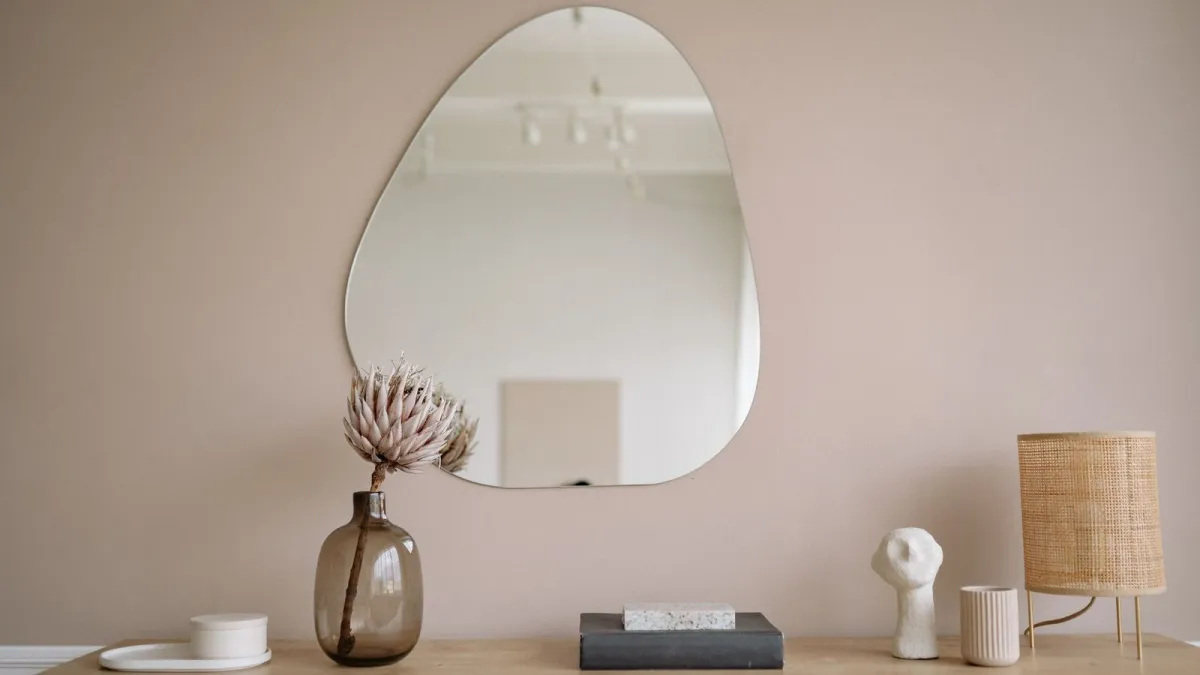
What a mirror reflects matters more than how big it is. It sends back whatever light and view are in front of it, so the same mirror can look right on one wall and awkward a metre along.
Where should you put a mirror in a room?
Start from the viewpoint, not the wall. Stand where you see the room from most often, such as the doorway or your seat at the table, and look for the wall that gives the best view from there. Then check it against the table.
| Room | Where a mirror helps | What to watch |
|---|---|---|
| Hallway | Along the longest wall or at the far end, where it adds depth and carries light from a glazed door | Hanging it too high, or reflecting a heap of coats and shoes |
| Living room | Beside or opposite a window, or above a console or fireplace | Showing the television or a bare lamp |
| Dining area | On the wall beside the table, where it shows the room and the window | Reflecting an untidy kitchen |
| Bedroom | Full length on a wardrobe door or a side wall | Facing the bed, where it catches every light and screen at night |
| Bathroom | Wide and plain over the basin, where you need to see yourself clearly | Steam, splashes and the wiring for any lights |
Do mirrors really make a room look bigger?
Not in square metres. A mirror shows a second view of the room, and your eye reads that view as more space behind the wall. The effect is strongest when the reflection holds depth: a window, an open doorway, a lit corner or the far end of the room.
Light is the other half of it. A mirror does not make light, it moves what is already there. Beside or opposite a window, it sends daylight back into the darker part of the room, so the room feels brighter and less gloomy away from the glass. After dark it shows every lamp twice, which suits soft lamplight but makes a bare bulb harsher.
Two placements usually work well: a large mirror on the long wall of a narrow room, which makes it feel wider, and one at the end of a corridor, which makes it feel longer. A small mirror in a dim corner does little, so go larger or move it where more light reaches it. In an open plan extension, a mirror on a blank side wall can add depth.

Where do mirrors not help?
These placements usually disappoint:
- Clutter in view: it shows the mess twice, and it is often the first thing you see from the door.
- A poor view: opposite a window onto a bin store or a blank wall, it just adds a second one.
- A bare bulb or low sun: the glare can dazzle you, and sunlight thrown across the room is hard to live with.
- Hanging too high: a common mistake. A mirror that shows only the ceiling adds nothing, so hang it with its middle roughly at eye level for the people who will use it.
- Behind a hob: an ordinary mirror is not made for heat and splashes. A painted glass splashback is the usual answer, and the supplier should confirm it suits the position.
What size, shape and finish should you choose?
How big should a mirror be?
One large mirror usually does more than several small ones. Over a console, sideboard or fireplace, keep it a little narrower than the furniture below so the two read as one group. For a full-length mirror, check you can see yourself from head to toe at a normal standing distance, not only from across the room.
Which shape suits which room?
Straight-edged rectangles suit most rooms and are the easiest to line up with furniture and skirting boards. Round and organic shapes soften a room full of right angles, like the pebble shape in the photo at the top of this page, and arches suit tall hallway walls.
Which finish should you pick?
Clear glass gives the truest reflection. Tinted and antique finishes usually look softer, but they reflect less light, so choose them for atmosphere, not to brighten a dim room.
| Finish | Effect | Suits |
|---|---|---|
| Clear | Brightest, most accurate reflection | Bathrooms, dressing areas, dim rooms |
| Antique | Soft, aged look that shows less fine detail | Halls and dining rooms |
| Bronze or grey tint | Darker, calmer reflection | A feature wall in a well-lit room |
| Frameless | A plain sheet with a polished edge | Modern rooms and wide walls |
| Framed | A visible edge that becomes part of the decoration | Traditional rooms, or contrast on a plain wall |
Off-the-shelf mirrors usually cost less and arrive sooner, but their sizes are fixed. For an awkward or wide wall, a mirror made to measure often looks better than one that nearly fits: our bespoke mirrors can be made to your own size, shape and finish.
How should a heavy mirror be fixed to the wall?
Glass is heavier than it looks, and a large mirror coming off the wall can cause a serious injury. Fix it to the structure, not just the plaster: masonry needs the right plugs and screws, and plasterboard needs fixings into the studs behind it or a heavy-duty cavity fixing rated for the weight. A picture hook is not enough. Tell whoever is fixing it what the wall is made of: solid brick, studwork, or tiles over plasterboard.
- Safety backing: a film on the back that helps hold the pieces in place if the glass breaks, as glass maker Pilkington describes its safety-backed mirror. It is worth having on large mirrors in halls, bedrooms and children's rooms.
- Leaning mirrors: fix the top, so a child, a pet or a slammed door cannot tip it.
Mirrors in bathrooms
How do you protect a bathroom mirror from steam?
Steam and splashes can attack the edges and backing of a mirror over time, so ask for sealed or protected edges and keep the glass out of direct shower spray. If you are also adding glass shower screens, order the mirror and the screen at the same stage, ideally after the tiling, so both are measured on the finished walls.
Do you need an electrician for an illuminated mirror?
In practice, yes: treat it as electrical work. A mirror with built-in lights, a demister pad or a shaver socket usually needs a hard-wired supply. Under the Building Regulations 2010 in England, adding a new circuit, or changing wiring close to a bath or shower, has to be certified, normally by a registered electrician who gives you a certificate afterwards, and any other electrical work must still be safe (Approved Document P, the government guidance on electrical safety). Have the electrician confirm the mirror suits the spot, and settle the position before tiling so the cable can be hidden. Our electricians are NICEIC-approved: see our lighting services.

How do you make sure a mirror works before you order it?
- Decide the job: more light, more depth, a full-length check or a feature wall.
- Test the position: stick masking tape round the outline on the wall, then look from the doorway and your usual seat, in daylight and after dark.
- Check the reflection: no clutter, no bare bulb, no glare from a window, and a view worth doubling.
- Choose size, shape and finish: look at a sample in daylight and under your own lights, as seeing samples in person shows what a photo cannot.
- Ask how it will be fixed: for your wall type, and whether the glass has a safety backing.
- Book the electrician early: if the mirror lights up, the cable position has to be settled before tiling and plastering.
- Measure on the finished wall: order a made-to-measure mirror late, as one of the last fittings in the renovation order.
Frequently Asked Questions
How many mirrors are too many in one room?
Usually one large mirror, or one tight group, is enough. Several scattered around a room compete with each other and give you reflections of reflections. If you want more than one, keep them off opposite walls so they do not face each other.
Will a mirror help a dark or north-facing room?
A little. It carries the daylight that is there further into the room, especially beside or opposite the window, but it cannot add any. Pair it with lamps at different heights, and keep to clear glass, because a tinted mirror reflects less light.
Can you stop a bathroom mirror steaming up?
Ventilation does most of the work, so run the extractor during and after a shower. A mirror with a built-in demister pad clears itself, but the pad is electrical, so have an electrician wire it, as with any lit mirror.
Are mirrored wardrobe doors a good idea?
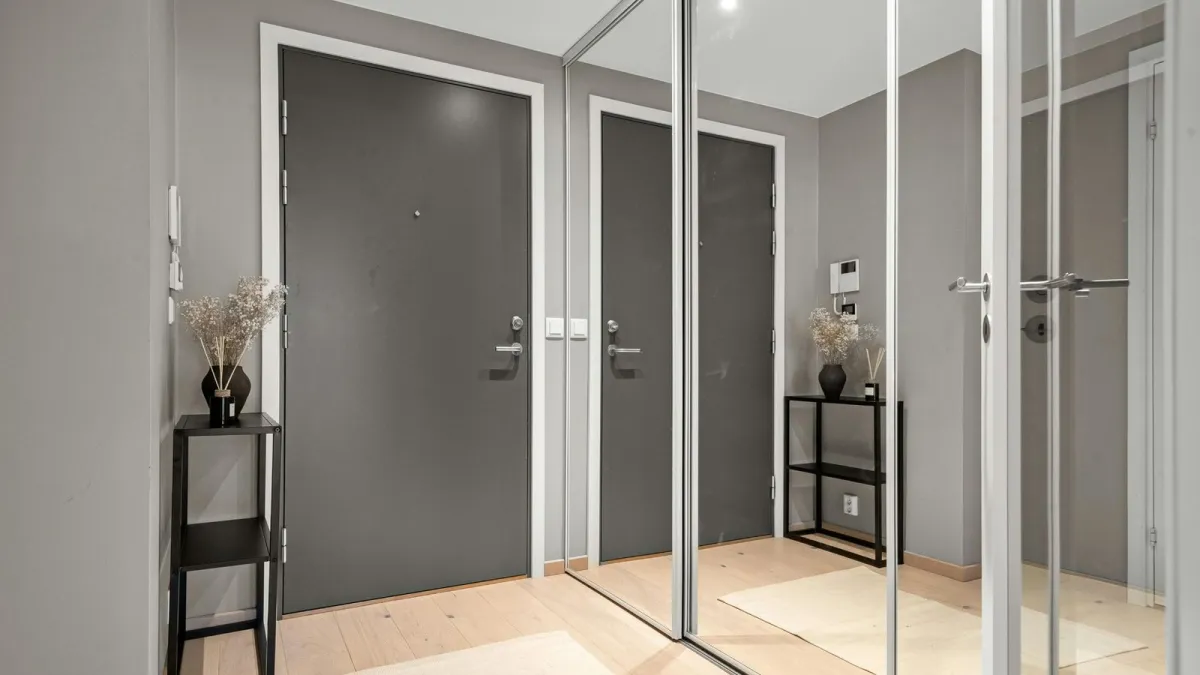
In a small bedroom or hallway, often yes: they double as a full-length mirror and send light across the room without using any wall space. Check what they will face at night, and ask how the doors are fixed and whether the glass has a safety backing.
Sources
- The Building Regulations 2010, regulation 12: Giving of a building notice or an application for building control approval, SI 2010/2214, legislation.gov.uk, revised text, checked 8 November 2026
- Approved Document P: Electrical safety, dwellings, Ministry of Housing, Communities and Local Government, 2013 edition
- Electrical safety: Approved Document P, publication page, Ministry of Housing, Communities and Local Government, gov.uk, checked 8 November 2026
- Pilkington Optimirror Protect, product page, Pilkington UK (manufacturer), April 2026
Final Thoughts
Our showroom in Fulham lets you see samples and compare finishes with our specialists, or you can ask for a free estimate on a mirror made for your own wall.
Let the reflection choose the wall, test the position with tape, and treat any lit mirror as an electrician's job.